

Most shoppers leave real money on the table every single week. Not because they’re careless, but because they’re shopping the way they’ve always shopped: one item at a time. Here’s the thing though: bundled deals save 10-30% compared to buying products individually, and most people never even notice. This guide is going to change that. We’ll walk through how bundles actually work, why they’re so effective, and how you can use them to stretch your budget further on the everyday products you already need.
Table of Contents
- What are bundled shopping deals and how do they work?
- Why bundled deals matter: savings, convenience, and psychological value
- The expert perspective: best practices and common pitfalls
- How to maximize your value: practical strategies for budget shoppers
- Find your next budget-friendly bundle with Secret Finds
- Frequently asked questions
Key Takeaways
| Point | Details |
|---|---|
| Bundled deals save money | Careful bundle selection can cut costs by 10-30% compared to buying items separately. |
| Convenience and time savings | Bundling reduces shopping decisions and saves time, especially with complementary products. |
| Beware bundle pitfalls | Avoid bundles with unrelated items or unclear savings to ensure value is maximized. |
| Expert-approved strategies | Verify savings per item, prioritize mixed bundles, and test small bundles for personal value. |
| Flexibility and personalization | Personalized, flexible bundles offer greater retention and loyalty for value-conscious shoppers. |
What are bundled shopping deals and how do they work?
A bundled shopping deal is simple: instead of buying one product at a time, you purchase two or more related items together at a combined price that’s lower than buying each one separately. Think of it like ordering a combo meal instead of each item off the menu. You get more, you spend less, and you walk away feeling like you made a smart call.
But not all bundles are built the same. Understanding the different types helps you spot the ones worth your money. According to bundle pricing mechanics, there are four main structures:
| Bundle type | How it works | Best for |
|---|---|---|
| Pure bundling | Items only sold as a package | Curated kits, starter sets |
| Mixed bundling | Buy bundled or individually | Flexible shoppers |
| Leader bundling | Popular item paired with add-ons | Upselling essentials |
| Tiered bundling | Good, better, best options | Different budget levels |
Here’s what each one means for you as a shopper:
- Pure bundles are all-or-nothing. You get the whole package, which works great when everything in it is something you’d actually use.
- Mixed bundles give you a choice. You can grab the bundle or just the single item. This flexibility is a win for budget shoppers.
- Leader bundles pair a popular product with a complementary one. Skincare kits are a classic example: a cleanser paired with a toner.
- Tiered bundles let you pick your level. A basic cleaning kit, a mid-range set, or a full home bundle. You choose what fits your budget.
When you know how to maximize savings and value by recognizing these structures, you stop guessing and start shopping with intention. And if you want to build better habits around everyday purchases, daily convenience tips can help you apply this thinking to your regular routine.
Why bundled deals matter: savings, convenience, and psychological value
Okay, so bundles exist. But why should you care? Because the benefits go way beyond just saving a few dollars. Let’s break it down.

First, the numbers. Bundles increase average order value by 20-30% for retailers, which means they’re motivated to keep offering them. That’s good news for you. And on the shopper side, bundling boosts sales by 20% while 63% of shoppers say they prefer bundles because of the perceived value they deliver.
But here’s what really surprised me when I started paying attention: bundles don’t just save money. They save mental energy. Decision fatigue is real. When you’re standing in a store or scrolling through a website trying to figure out which shampoo pairs with which conditioner, your brain gets tired. A well-curated bundle removes that friction entirely.
“Bundles can outperform individual discounts through psychology, delivering 7-23% more perceived value than standalone discounts.”
That’s not just a marketing trick. It reflects something real about how we experience value. When items feel like they belong together, the whole package feels worth more than the sum of its parts.
Here’s a quick comparison to make this concrete:
| Shopping method | Time spent | Avg. savings | Decision effort |
|---|---|---|---|
| Individual items | High | Minimal | High |
| Bundled deals | Low | 10-30% | Low |
The benefits stack up fast:
- ✅ Real dollar savings on products you already need
- ✅ Less time comparing individual prices
- ✅ Fewer decisions to make per shopping trip
- ✅ Products that are curated to work together
- ✅ Easier to stick to a budget when the total is clear upfront
For anyone trying to find smart online savings without spending hours researching, bundles are genuinely one of the most underrated tools available. And when it comes to daily essentials value, the right bundle can cover a week’s worth of needs in a single purchase.
The expert perspective: best practices and common pitfalls
Now, I want to be honest with you. Not every bundle is a good deal. Some are genuinely great. Others are just clever packaging designed to make you feel like you’re saving when you’re really not. Here’s how to tell the difference.
Experts at Harvard Business Review note that bundles appeal to inflation-weary consumers, but warn that mismatched bundles dilute value fast. Mixed bundling is the format they favor most, because it respects your autonomy as a shopper. You’re not forced into buying things you don’t need.
Here are the steps I’d recommend before committing to any bundle:
- Check the per-unit price. Add up what each item would cost individually. If the bundle doesn’t beat that total by at least 10%, it’s not worth it.
- Ask yourself: would I buy all of these anyway? If the answer is no, you’re not saving money. You’re spending more.
- Look for complementary products. A broom and dustpan bundle makes sense. A broom and a vitamin supplement bundle does not.
- Watch for over-discounting. If something is marked down 60%, ask why. Sometimes it’s a clearance item dressed up as a deal.
- Read the fine print. Some bundles lock you into subscriptions or have return restrictions that make them less flexible.
The bundling psychology behind why we love bundles is fascinating, but it can also work against us. There’s something called moral licensing: when we feel like we got a deal, we sometimes justify spending more elsewhere. Stay aware of that pattern.
Pro Tip: Before adding a bundle to your cart, spend 60 seconds checking the individual prices on the same site. If the math checks out and you’d use everything in it, go for it. If not, skip it without guilt.
The best bundles for practical essentials savings are the ones that feel almost obvious: cleaning supplies that go together, personal care items you use daily, or kitchen tools that complement each other. When you discover useful products that genuinely fit your life, the value is immediate and obvious. And if you’re ever unsure where to start, a solid budget must-haves guide can help you identify what you actually need before you shop.
As bundle pricing research points out, poor bundles with unrelated items erode both margins and trust. That’s a retailer problem, but it becomes your problem when you end up with products collecting dust on a shelf.
How to maximize your value: practical strategies for budget shoppers
Alright, let’s get practical. You understand what bundles are, why they work, and what to watch out for. Now let’s talk about how to actually use them to your advantage on a regular basis.
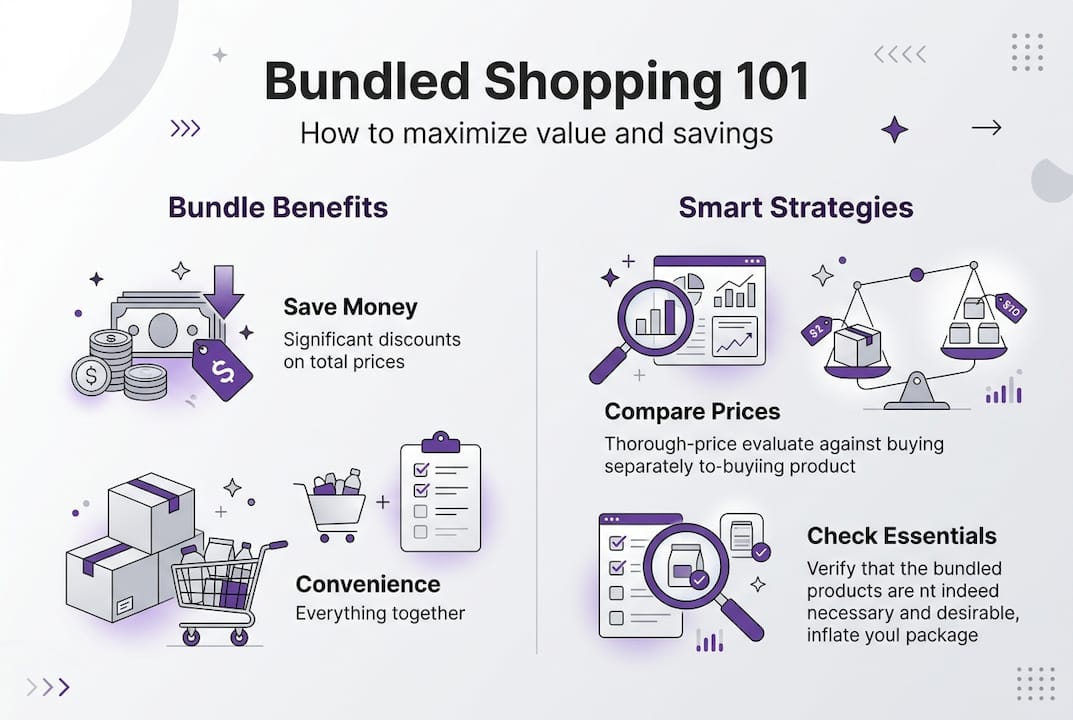
The single most important shift you can make is this: shop for bundles based on your actual needs, not based on what looks like a deal. It sounds obvious, but it’s easy to get swept up in the excitement of a discount.
Here’s a simple framework that works:
- Start with your shopping list. Write down what you genuinely need this week or month. Cleaning supplies? Personal care items? Kitchen staples?
- Search for bundles in those categories first. Don’t browse bundles randomly. Go in with a purpose.
- Compare the bundle price to individual prices. This takes two minutes and tells you everything.
- Test with a small bundle first. If you’ve never bought from a particular store or brand, start with a smaller bundle to check quality before committing to a larger one.
- Track what you actually use. After a month, look at what’s left over. That tells you whether the bundle was truly a fit.
Personalized bundles yield 40% higher retention for shoppers, which means when a bundle genuinely matches your lifestyle, you keep coming back. That’s not just good for the retailer. It means you’ve found something that actually works for you.
Pro Tip: Build a simple monthly essentials list and use it as your bundle shopping guide. When a bundle covers 80% or more of that list at a lower total price, it’s almost always worth it.
For anyone focused on health and wellness purchases, a budget health buyers guide can help you identify which supplement or personal care bundles offer the most consistent value. And if home cleaning is your priority, budget-friendly cleaning tips can point you toward the bundles that make the biggest difference without blowing your budget.
The bottom line is this: bundles work when you work them. They’re not magic, but they’re one of the most reliable ways to get more of what you need for less than you’d normally spend.
Find your next budget-friendly bundle with Secret Finds
If you’ve made it this far, you’re already thinking smarter about how you shop. And that’s exactly the kind of shopper Secret Finds was built for. We curate practical, affordable products that actually make daily life easier, and we love putting together bundles that make sense for real people with real budgets.

Whether you’re stocking up on home essentials, refreshing your self-care routine, or upgrading your kitchen setup, we’ve got options that deliver genuine value. Start with our budget essentials guide to get clear on what you need, then explore our beauty and self-care bundles or browse our kitchen bundle deals for curated picks that stretch your dollar further. Sign up for our newsletter and you’ll also get access to exclusive discounts and free shipping offers that make every bundle even better.
Frequently asked questions
How can I tell if a bundled deal offers real savings?
Compare the bundle’s total price to buying each item individually and look for a clear discount, typically in the 10-30% savings range. If the math doesn’t add up, it’s not a real deal.
Which types of products are best suited for bundled shopping deals?
Complementary products you use regularly, like home cleaning kits, kitchen gadgets, or self-care sets, tend to offer the greatest bundle value because they’re things you’d buy anyway.
What common mistakes should I avoid with bundled shopping deals?
Avoid bundles that pair unrelated items together or include products you wouldn’t normally buy. Always check that the bundle aligns with your actual usage before purchasing.
Are bundles always better than individual item discounts?
Not always. Bundles outperform individual discounts when the items are useful and the savings are real, but they lose their appeal when value is diluted or the products don’t match your needs.
What is mixed bundling and why is it preferred?
Mixed bundling lets you choose between buying the bundle or individual items, giving you flexibility. Experts favor mixed bundling because it respects shopper autonomy and reduces the risk of buying things you don’t need.











