

Juggling daily routines while staying within a tight budget often feels like an impossible balancing act. You want convenience, better health, and a more efficient home, but every solution seems to come with a hefty price tag. The good news is that optimizing your daily life doesn’t require draining your savings. By combining strategic planning with carefully selected products, you can transform your routines, cut costs, and improve your overall well-being. This guide walks you through actionable strategies covering meal planning, smart product choices, and affordable technology that deliver real results without breaking the bank.
Table of Contents
- Key takeaways
- What you need: preparing for convenience optimization on a budget
- Step-by-step execution: optimizing routines with smart products and planning
- Verifying results: assessing convenience gains and adjusting for long-term benefits
- Discover budget-friendly essentials to enhance your daily convenience
- How to optimize daily convenience – FAQ
Key Takeaways
| Point | Details |
|---|---|
| Meal planning savings | Strategic meal planning can cut grocery costs by up to 40 percent and minimize waste through weekly planning and bulk prep. |
| Versatile home products | Identify multi use items like HEPA vacuums microfiber cloths storage containers and air purifiers that serve multiple purposes and reduce waste and cost. |
| Quality over cheap | Avoid ultra cheap options that carry more additives or harsh chemicals and replace them sooner; instead choose affordable quality that lasts. |
| Energy monitoring savings | Using a simple energy monitor or smart plug can reveal usage patterns and cut electricity waste. |
What you need: preparing for convenience optimization on a budget
Before diving into product purchases and routine changes, you need a clear picture of where your daily life could use improvement. Start by spending a week observing your routines. Which tasks eat up the most time? Where do you feel frustrated or inefficient? Maybe meal prep takes forever, your cleaning supplies create more work than they solve, or you’re constantly guessing about your energy consumption. These pain points become your roadmap for targeted improvements.
Strategic meal planning reduces costs by 25-40% while minimizing waste, making it your first priority. Create a simple system: dedicate 30 minutes each Sunday to plan meals for the week, build a grocery list around sales and seasonal produce, and prep ingredients in bulk. This approach transforms grocery shopping from a budget drain into a controlled expense. You’ll buy only what you need, avoid impulse purchases, and eliminate the costly habit of ordering takeout when you’re unprepared.
Next, identify versatile, multi-use products that deliver multiple benefits. Healthy home products like HEPA vacuums reduce allergens and volatile organic compounds, improving home health affordably. Look for items that serve dual purposes: microfiber cloths that clean multiple surfaces, storage containers that organize and preserve food, or air purifiers that tackle both dust and odors. These investments pay dividends by replacing multiple single-purpose products.

One critical mistake budget shoppers make is gravitating toward the absolute cheapest options. Cheaper food products have more additives and sugar, creating health trade-offs that can increase medical costs down the road. The same principle applies to household products. Ultra-cheap cleaning supplies may contain harsh chemicals that irritate skin or damage surfaces, requiring replacement purchases. Focus on the sweet spot: affordable products with proven quality that won’t need frequent replacement.
Pro Tip: Create a simple spreadsheet tracking your current spending across groceries, household products, and utilities. This baseline lets you measure real savings as you implement changes, keeping you motivated and helping you spot which strategies deliver the biggest impact.
Your basic toolkit should include:
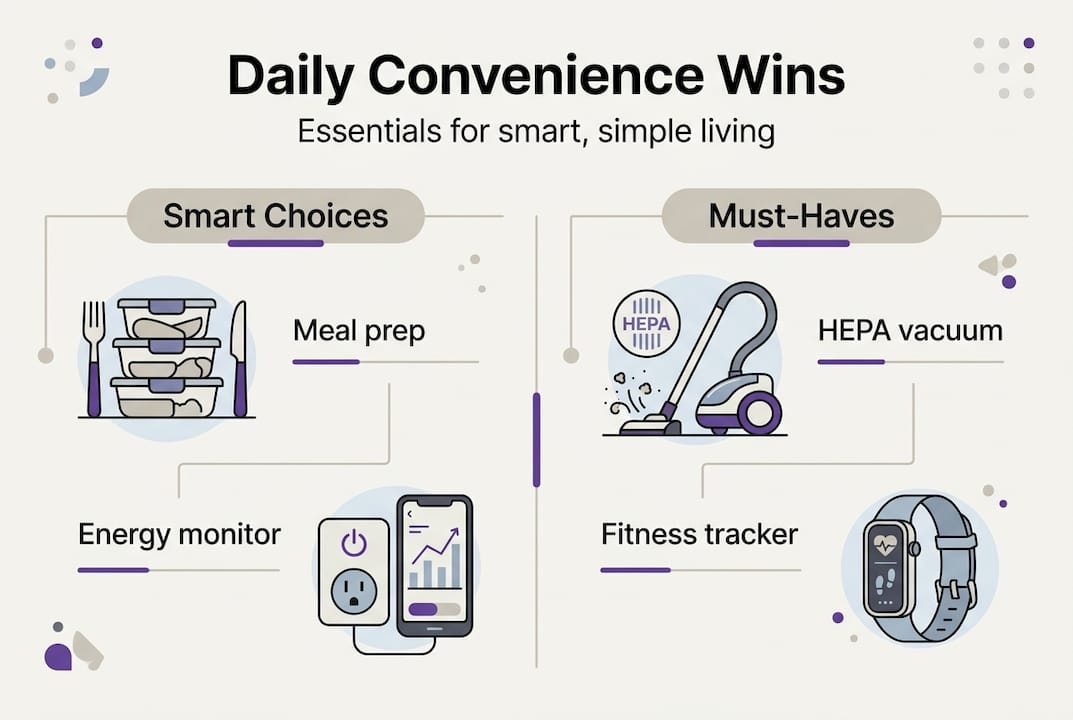
- Reusable meal prep containers in various sizes
- A quality vacuum with HEPA filtration
- Fragrance-free, multi-surface cleaning concentrates
- Basic fitness tracking capability (even a smartphone app works initially)
- A simple energy monitoring device or smart plug
Here’s how different product categories stack up for budget-conscious convenience optimization:
| Product Category | Initial Cost | Monthly Savings Potential | Health Benefit | Convenience Impact |
|---|---|---|---|---|
| Meal planning tools | $20-50 | $80-150 | High (better nutrition) | High (time saved) |
| HEPA vacuum | $100-200 | $0-20 (reduced cleaning products) | Very High (allergen reduction) | Medium (efficient cleaning) |
| Smart energy monitor | $25-80 | $15-25 | Low | Medium (usage awareness) |
| Fitness tracker | $30-100 | $0-30 (preventive health) | High (activity motivation) | High (health insights) |
| Quality storage containers | $30-60 | $40-80 (less food waste) | Medium (fresher food) | High (organization) |
Explore budget must-haves that align with your specific pain points rather than buying everything at once. Prioritize the areas where you’re currently losing the most money or time, then expand from there.
Step-by-step execution: optimizing routines with smart products and planning
Now that you’ve identified your needs and gathered essential tools, it’s time to implement changes that deliver measurable improvements. Follow these steps in order to build momentum and see results quickly.
-
Launch your meal planning system. Pick a consistent day each week for planning and prep. Review grocery store flyers, choose recipes that share ingredients to minimize waste, and create your shopping list. Meal planning and strategic grocery shopping reduce costs by 25-40%, enabling budget allocation to health-focused products. Batch-cook proteins, chop vegetables, and portion snacks on your prep day. This single habit creates a cascade of benefits: less decision fatigue, fewer expensive convenience foods, reduced waste, and better nutrition.
-
Upgrade to multi-use home products strategically. Replace your current cleaning arsenal with concentrated, fragrance-free cleaners that work on multiple surfaces. Invest in a quality HEPA vacuum that captures fine particles, improving air quality while reducing the need for expensive air fresheners or allergy medications. Choose microfiber cloths that clean effectively with just water, eliminating the need for disposable wipes. Each product swap should reduce both your shopping list and your exposure to unnecessary chemicals.
-
Install and configure your energy monitoring system. Smart energy monitors yield a 16.7% energy reduction and $267 annual savings per household. Start with a simple plug-in monitor for your highest-use appliances or a whole-home monitor if your budget allows. Spend the first week just observing patterns without making changes. You’ll likely discover surprising energy hogs: that old refrigerator in the garage, devices left in standby mode, or inefficient heating and cooling habits. Once you understand your baseline, make targeted adjustments like unplugging vampire devices, adjusting thermostat schedules, or replacing one high-consumption appliance.
-
Begin tracking health metrics with wearable technology. Wearable fitness trackers correlate with ~5% weight loss in six months, proving their cost-effectiveness for health improvement. You don’t need the most expensive model. Choose a basic tracker that monitors steps, sleep, and heart rate. Set realistic initial goals: 7,000 steps daily, seven hours of sleep, or 20 minutes of intentional movement. The key is consistent tracking that reveals patterns and motivates gradual improvement. Many users discover they’re far less active than they assumed, making this data invaluable for lifestyle adjustments.
-
Balance cost and quality in every purchase decision. When selecting products, research reviews from actual users, compare ingredient lists or specifications, and calculate cost per use rather than just upfront price. A $15 concentrated cleaner that lasts six months beats a $3 spray bottle you replace monthly. Similarly, a $40 set of quality food containers that last years outperforms cheap versions that crack and stain within months. This mindset shift maximizes your convenience return on investment.
Pro Tip: Create a simple monthly check-in ritual. Spend 15 minutes reviewing your grocery spending, energy bills, and health metrics. This regular review keeps you accountable and helps you spot trends before they become problems.
Here’s how different approaches compare for optimizing daily routines:
| Approach | Upfront Investment | Time to See Results | Difficulty Level | Long-term Value |
|---|---|---|---|---|
| Meal planning and prep | Low ($20-50) | 2-4 weeks | Medium (habit building) | Very High |
| Energy monitoring and optimization | Low to Medium ($25-100) | 1-2 months | Low (mostly awareness) | High |
| Multi-use product upgrades | Medium ($100-200) | Immediate to 1 month | Low (simple swaps) | High |
| Fitness tracking and goals | Low to Medium ($30-100) | 4-8 weeks | Medium (consistency needed) | Very High |
| Complete routine overhaul | High ($300+) | 2-3 months | High (multiple changes) | Very High |
Find more budget-friendly daily essentials that fit your optimization strategy, and check out the budget health buyers guide for detailed product comparisons.
Verifying results: assessing convenience gains and adjusting for long-term benefits
Implementing changes means nothing without measuring their impact. Verification helps you double down on what works and quickly abandon strategies that don’t deliver results for your specific situation.
Start with financial tracking. Compare your grocery spending month over month. Are you hitting that 25-40% reduction from meal planning? If not, identify the gaps. Maybe you’re still making too many mid-week store runs, or your meal plans are too ambitious and creating waste. Track food waste specifically by noting what you throw away each week. Even small reductions add up to significant annual savings. Similarly, review your energy bills for the past three months against your pre-monitoring baseline. You should see gradual declines as you adjust habits and eliminate energy waste.
Your wearable device provides immediate health feedback. Review weekly averages for steps, sleep quality, and active minutes. Are you seeing upward trends? Even small improvements like an extra 1,000 steps daily or 30 minutes more sleep per week compound into substantial health benefits over months. If progress stalls, adjust your goals or try different activities. The device is a tool for awareness, not a judge of your worth.
Watch for quality of life improvements beyond numbers. Do you feel less stressed about meals? Is your home easier to keep clean? Are you sleeping better? These subjective measures matter just as much as financial savings. If a particular product or routine creates more hassle than benefit, don’t force it. Convenience optimization should make life easier, not add complexity.
One critical pitfall to avoid: cheaper food products often have more additives and sugar, creating health trade-offs that may offset savings. If you notice increased fatigue, digestive issues, or other health changes after switching to bargain foods, reassess your choices. The goal is sustainable savings, not short-term wins that create long-term costs. Similarly, if ultra-cheap household products irritate your skin or damage surfaces, you’re not actually saving money.
Key verification checkpoints:
- Monthly grocery spending compared to baseline (target: 25-40% reduction)
- Weekly food waste tracking (target: minimal discarded items)
- Quarterly energy bill comparison (target: 10-15% reduction)
- Weekly health metrics from wearable device (target: consistent improvement or maintenance)
- Quarterly product performance review (target: items lasting as expected without quality issues)
- Monthly convenience assessment (target: feeling less stressed and more in control)
“Expert nuance: mHealth apps reduce healthcare costs by ~5% and daily steps improve child adiposity outcomes, demonstrating how affordable technology creates measurable health improvements that translate to long-term savings.”
Adjust your approach based on results. If meal planning saves you $100 monthly, consider investing some of those savings into higher-quality ingredients or time-saving kitchen tools. If your energy monitor reveals your water heater is the biggest drain, prioritize that upgrade next. Use each success to fund the next improvement, creating a self-reinforcing cycle of optimization.
For ongoing support and practical tips, explore the home cleaning checklist practical tips to maintain your newly optimized routines efficiently.
Discover budget-friendly essentials to enhance your daily convenience
You’ve learned the strategies, implemented the changes, and started seeing results. Now it’s time to explore products specifically curated to support your convenience optimization journey. Secret Finds Online specializes in practical, affordable items that solve real problems without the premium price tags of big-name brands.

Our household appliances collection features versatile tools designed to streamline daily tasks, from efficient cleaning solutions to food storage systems that extend freshness. Each product is selected for its ability to deliver multiple benefits, maximizing your investment. Explore lifestyle gadgets that help improve health and home efficiency, including fitness accessories, wellness products, and smart home basics that fit any budget. Whether you’re just starting your optimization journey or looking to upgrade specific areas, our everyday essentials guide helps you make informed choices that align with your goals and budget.
How to optimize daily convenience – FAQ
What are the easiest first steps to optimize daily convenience on a budget?
Start with meal planning and grocery list creation, which requires minimal upfront investment but delivers immediate savings of 25-40% on food costs. Add a simple energy monitoring device to identify your biggest utility drains. These two changes cost under $100 combined but create measurable improvements within weeks.
How do wearable fitness trackers help improve health affordably?
Fitness trackers provide continuous feedback on your activity levels, sleep quality, and heart rate, creating awareness that motivates behavior change. Studies show users achieve approximately 5% weight loss over six months, making these devices highly cost-effective preventive health tools. Basic models under $50 offer all essential tracking features.
Can smart energy monitors fit low-income households and what savings to expect?
Absolutely. Entry-level monitors cost $25-40 and typically generate $267 in annual savings through a 16.7% reduction in energy use. The device pays for itself within two months, making it one of the highest-return investments for budget-conscious households. Installation requires no special skills or tools.
What are some healthy alternatives to highly processed cheap foods?
Focus on whole foods bought in bulk: dried beans, rice, oats, frozen vegetables, and seasonal fresh produce. These staples cost less per serving than processed alternatives while providing superior nutrition without excessive additives or sugar. Meal planning around these ingredients maximizes both health and budget benefits.
How often should I reassess convenience products and routines for best results?
Conduct a thorough quarterly review of your systems, products, and spending patterns. Monthly mini-check-ins help you catch problems early, but quarterly assessments let you see meaningful trends and make strategic adjustments. Annual reviews are perfect for evaluating whether to upgrade products or expand into new optimization areas based on accumulated savings.











