

Many people assume everyday essentials mean expensive designer products or complicated specialty items. The truth is far simpler. Everyday essentials are affordable, practical products that improve your daily routines without breaking the bank. These items enhance convenience, boost health, and organize your home life efficiently. Understanding what qualifies as an essential and how to shop smart transforms your budget and simplifies decision-making. This guide clarifies what everyday essentials truly are, which products deliver the best value, and how cost-conscious shoppers can build better routines while saving money consistently.
Table of Contents
- Key takeaways
- Understanding everyday essentials: what they are and why they matter
- Affordable everyday essentials: staple products and budget-friendly brands
- Smart shopping and planning for everyday essentials
- Applying everyday essentials to enhance your home life and health
- Enhance your everyday essentials with trusted finds
- FAQ
Key Takeaways
| Point | Details |
|---|---|
| Definition of essentials | Everyday essentials are affordable, practical products used regularly to improve daily life without premium prices. |
| Essential categories | They span groceries, household supplies, health boosters, and storage items that support convenience, health, and organization. |
| Store brand value | Store brands and discount retailers offer products that perform comparably to premium options while costing less. |
| Smart shopping and budgeting | Planning purchases, budgeting tips, and deliberate stocking help maximize value and prevent waste. |
| Practical life benefits | Using quality essentials reduces last minute shopping, creates predictable routines, and supports healthier environments. |
Understanding everyday essentials: what they are and why they matter
Everyday essentials are affordable, practical products you use regularly in daily routines. They form the foundation of convenient, healthy, and organized living without requiring premium prices. These items meet basic needs efficiently while enhancing quality of life through consistent use. The key distinction is that essentials serve functional purposes rather than luxury or status goals.
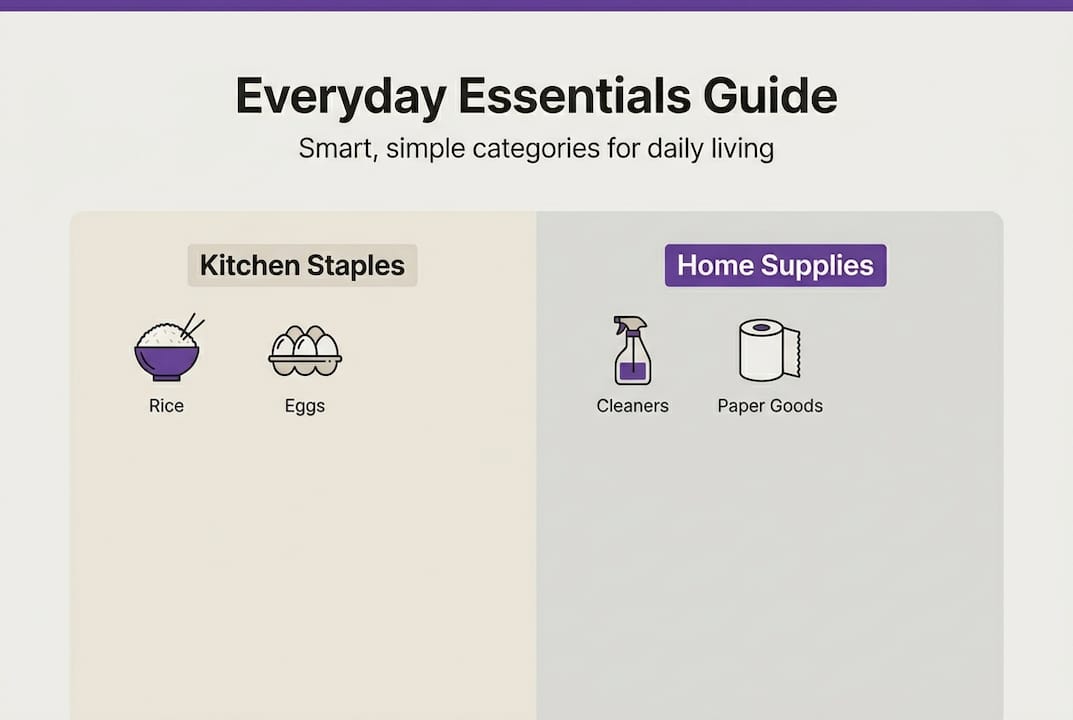
Everyday essentials fall into several clear categories. Grocery staples include rice, beans, oats, eggs, and canned tomatoes that provide nutritious meal foundations. Household supplies cover toilet paper, cleaning wipes, laundry detergent, and trash bags that maintain cleanliness. Health boosters encompass supplements, water filters, and personal care items that support wellness. Storage and organization products like bins, baskets, and drawer dividers reduce clutter and improve efficiency. Each category addresses specific daily needs while remaining budget-friendly.
These items matter because they directly impact your daily experience. Household products enhancing home life include cleaning supplies, storage bins, laundry detergent, and water filters that reduce contaminants. When you stock quality essentials, you eliminate last-minute shopping stress, maintain healthier environments, and create predictable routines. The right essentials also prevent costly mistakes like buying trendy items that quickly lose usefulness.
Affordable options exist across all essential categories. You don’t need premium brands to achieve quality results. Store brands and discount retailers offer products that perform comparably to expensive alternatives. The focus should be on functionality and consistent availability rather than packaging or marketing hype. Smart shoppers recognize that household appliances and basic supplies deliver value through reliability, not branding.
Key characteristics of true everyday essentials include:
- Used multiple times per week or daily
- Solve practical problems efficiently
- Remain affordable for most budgets
- Available from multiple retailers
- Provide consistent quality across brands
Understanding these fundamentals helps you distinguish genuine essentials from unnecessary purchases. With this foundation established, you can now explore specific staple products and budget-friendly brands that maximize your shopping value.
Affordable everyday essentials: staple products and budget-friendly brands
Staple grocery essentials form the backbone of cost-effective meal planning. Rice provides versatile carbohydrates at minimal cost. Oats deliver fiber-rich breakfasts. Beans offer plant-based protein. Eggs supply complete protein affordably. Peanut butter adds healthy fats and protein. Potatoes, carrots, onions, and bananas provide essential nutrients. Canned tomatoes enable countless recipes. These staples ensure meals remain nutritious, versatile, and budget-friendly while reducing reliance on expensive convenience foods.

Budget brands deliver quality that rivals name brands without premium pricing. Amazon Basics and Walmart Great Value offer household essentials like toilet paper and cleaning wipes comparable in quality to name brands but at lower prices. These store brands undergo rigorous testing and often come from the same manufacturers as premium options. The primary difference lies in marketing budgets, not product performance. Choosing budget brands for everyday items frees money for priorities that truly require premium quality.
Comparing name brands to store brands reveals significant savings opportunities. The table below shows typical price differences for common household essentials.
| Product Category | Name Brand Price | Store Brand Price | Annual Savings |
|---|---|---|---|
| Toilet Paper (24-pack) | $18.99 | $12.49 | $78 |
| Cleaning Wipes (3-pack) | $11.97 | $7.48 | $54 |
| Laundry Detergent (100 oz) | $14.99 | $9.97 | $60 |
| Paper Towels (12-pack) | $21.99 | $14.99 | $84 |
Buying staples in appropriate quantities amplifies savings. Bulk purchasing reduces per-unit costs significantly. Subscribe and Save programs automate replenishment while offering discounts between 5% and 15%. These services ensure you never run out of essentials while maintaining the lowest possible prices. Automation also prevents impulsive shopping trips where unplanned purchases inflate spending.
Pro Tip: Create a master list of your household’s top 20 essentials and set up Subscribe and Save for items you use monthly. This single step can reduce your annual household spending by $300 to $500 while eliminating shopping stress.
Prioritizing budget-friendly daily essentials over trendy products maintains financial flexibility. When you stock reliable staples and choose store brands strategically, you build a foundation for consistent, affordable living. The money saved on basics can then fund occasional treats or long-term savings goals without sacrificing daily quality.
Key staple categories to prioritize include:
- Grain staples: rice, oats, pasta, bread
- Protein sources: eggs, beans, peanut butter, canned tuna
- Produce basics: potatoes, onions, carrots, bananas, apples
- Dairy essentials: milk, cheese, yogurt
- Pantry foundations: canned tomatoes, cooking oil, flour, sugar
With staple products and budget brands identified, the next step involves implementing smart shopping strategies that optimize every purchase and maintain household convenience efficiently.
Smart shopping and planning for everyday essentials
Planning meals around staples streamlines grocery shopping and reduces waste. Follow this step-by-step approach. First, inventory your pantry and identify which staples need replenishment. Second, plan five to seven meals using items you already own plus two to three fresh ingredients. Third, create a focused shopping list organized by store section. Fourth, shop once weekly to minimize impulse purchases. Fifth, prep ingredients immediately after shopping to ensure convenient meal assembly throughout the week.
Bulk buying and seasonal produce selection deliver substantial savings. Prioritize bulk buys, store brands, seasonal produce, and subscribe-and-save options for convenience and savings. Buying larger quantities of non-perishables like rice, beans, and oats reduces per-unit costs by 20% to 40%. Seasonal produce costs less and tastes better because it doesn’t require long-distance shipping or extended storage. Summer tomatoes, fall squash, and winter citrus provide peak nutrition at minimum prices.
Subscription models automate essential purchases while preventing impulsive buys. Services like Subscribe and Save deliver household items on predictable schedules. You set the frequency based on actual usage patterns, ensuring products arrive before you run out. This automation eliminates emergency store runs where unplanned items inflate spending. Subscriptions also lock in discount pricing, protecting against temporary price increases.
Simplifying your essential list prevents decision fatigue and promotes consistent routines. When you limit choices to proven staples, shopping becomes faster and less stressful. You develop familiarity with product quality and pricing, making it easier to spot genuine deals. Consistency also reduces food waste because you learn exactly how quickly your household consumes each item.
Pro Tip: Track pantry inventory using a simple smartphone note or magnetic notepad on your refrigerator. When an item reaches 25% remaining, add it to your shopping list immediately. This prevents both running out and overbuying.
Experts emphasize that straightforward shopping reduces stress and saves money. As one financial advisor notes:
Complicated shopping strategies often fail because they require too much mental energy. The most successful budget shoppers keep things simple: buy staples in bulk, choose store brands, track what you actually use, and automate replenishment. This approach saves money without requiring constant attention.
Implementing these strategies creates a sustainable system for managing everyday essentials. The numbered steps below summarize the complete approach:
- Inventory current supplies weekly
- Plan meals around existing staples
- Create organized shopping lists
- Shop once weekly at consistent times
- Choose seasonal produce and bulk staples
- Set up subscriptions for predictable items
- Track usage patterns to refine quantities
- Review spending monthly to identify improvements
Applying money saving shopping tips consistently transforms your relationship with everyday essentials. Shopping becomes a planned activity rather than a reactive chore. With these methods established, you can now explore how everyday essentials specifically enhance home life and health through practical application.
Applying everyday essentials to enhance your home life and health
Affordable nutritious diets are achievable through strategic essential shopping. The USDA Thrifty Food Plan estimates nutritious weekly food costs for individuals and families, emphasizing cost-effective healthy eating. For a single adult, weekly costs range from $57 to $71 depending on age and gender. A family of four typically spends $195 to $225 weekly for balanced nutrition. These benchmarks prove that healthy eating doesn’t require premium budgets when you focus on staple ingredients.
Household essentials like water filters and cleaning supplies directly impact health and cleanliness. Water filters remove contaminants like chlorine, lead, and bacteria, improving taste while reducing exposure to harmful substances. Quality cleaning supplies eliminate germs and allergens that cause illness. Regular use of these essentials creates healthier indoor environments, reducing sick days and medical expenses over time. The upfront cost of filters and cleaners pays dividends through improved wellness.
Home organization products reduce clutter and improve daily efficiency. Storage bins keep seasonal items accessible but out of sight. Drawer dividers prevent utensil chaos. Closet organizers maximize space while simplifying outfit selection. When everything has a designated place, you spend less time searching and more time on productive activities. Organization also prevents duplicate purchases because you can see what you already own.
Integrating staples and supplies creates balanced, budget-friendly living. Start with grocery staples that provide nutritional variety. Add household supplies that maintain cleanliness effortlessly. Include health items like supplements and filters that prevent problems. Finish with organization tools that streamline daily tasks. This comprehensive approach addresses multiple life areas without requiring separate shopping trips or premium spending.
The table below compares weekly grocery budgets and health benefits across different household sizes, demonstrating how essentials support wellness affordably.
| Household Size | Weekly Food Budget | Key Staples | Primary Health Benefits |
|---|---|---|---|
| Single Adult | $57-$71 | Rice, eggs, beans, seasonal produce | Balanced nutrition, energy stability |
| Couple | $114-$142 | Bulk grains, proteins, vegetables | Shared meal prep, reduced processed food |
| Family of 4 | $195-$225 | Large staple quantities, diverse proteins | Complete nutrition, family meal routines |
| Family of 6 | $280-$320 | Maximum bulk buying, seasonal focus | Cost per person drops, variety maintained |
Practical examples show how essentials work together. A household using rice, beans, and seasonal vegetables as staples can create dozens of nutritious meals weekly. Adding a water filter ensures clean drinking water without bottled water costs. Using storage bins for bulk purchases prevents spoilage. Employing cleaning wipes maintains surfaces between deep cleaning sessions. Each essential serves its purpose while supporting overall household function.
Exploring home storage and organization products reveals additional ways to optimize your living space. When essentials are properly stored and easily accessible, daily routines flow smoothly. You waste less time managing your home and more time enjoying it.
Key health and home benefits of everyday essentials include:
- Nutritious meals from affordable staple ingredients
- Cleaner indoor air through regular surface cleaning
- Reduced contamination exposure via water filtration
- Lower stress from organized, clutter-free spaces
- Fewer illness-related costs through preventive cleanliness
With a clear framework for applying essentials to real life, you’re ready to discover curated products that complement these principles and enhance your everyday routines further.
Enhance your everyday essentials with trusted finds
Finding reliable, affordable products that truly enhance daily life can feel overwhelming. Secret Finds Online curates practical essentials that complement the smart shopping strategies you’ve learned. The platform focuses on quality items that deliver genuine value without premium pricing, helping you build better routines affordably.

Explore supplements that support brain health and focus, like organic mushroom powder for brain health, which combines six functional mushrooms for cognitive support. Heart health essentials include omega-3 fish oil supplement rich in EPA and DHA for cardiovascular wellness. Browse household appliances that simplify daily tasks without complicated features or excessive costs. Each product selection emphasizes functionality, affordability, and real-world usefulness, aligning perfectly with the essential-focused approach covered throughout this guide.
Now that you understand how to select, shop for, and apply everyday essentials effectively, let’s address common questions that arise when building your essential product routine.
FAQ
What are common examples of everyday essentials?
Common everyday essentials include staple groceries like rice, beans, oats, eggs, and canned tomatoes that form meal foundations. Household supplies like toilet paper, cleaning wipes, laundry detergent, and trash bags maintain cleanliness. Health items like water filters, multivitamins, and basic first aid supplies support wellness. Organization products like storage bins and drawer dividers reduce clutter. All these items focus on affordability, practicality, and regular use rather than luxury or status.
How can I save money when buying everyday essentials?
Save money by choosing store brands like Amazon Basics or Walmart Great Value that match name-brand quality at lower prices. Buy non-perishables in bulk to reduce per-unit costs by 20% to 40%. Select seasonal produce that costs less and tastes better. Set up subscription services for predictable items to lock in discounts and automate replenishment. Track what you actually use to prevent overbuying and waste. These money saving shopping tips create sustainable savings without sacrificing quality.
Are everyday essentials suitable for people with allergies or dietary restrictions?
Many everyday essentials offer options suitable for allergies and dietary restrictions. Look for free-from labels indicating absence of common allergens like gluten, dairy, or nuts. Choose fragrance-free cleaning products and hypoallergenic personal care items if you have sensitivities. Read ingredient labels carefully and select products specifically formulated for your needs. Many budget brands now offer specialized options at prices comparable to standard products. Explore allergy-sensitive household essentials that accommodate various sensitivities without premium pricing.
What’s the best way to organize and store everyday essentials?
Organize essentials using clear storage bins labeled by category for easy identification. Keep frequently used items at eye level and backstock below or above. Use drawer dividers for small items like batteries and tools. Create designated pantry zones for grains, canned goods, and snacks. Maintain a running inventory list to track when items need replenishment. Store bulk purchases in airtight containers to maintain freshness. These home storage and organization strategies ensure essentials remain accessible while reducing clutter and preventing waste through better visibility.
Recommended
- Discover budget-friendly daily essentials that save money in 2026
- How to save money shopping online: tips for 2026
- Beauty tools and self-care accessories – Secret Finds Online
- Small desk and lifestyle gadgets – Secret Finds Online
- Role of Footwear in Daily Comfort: Complete Guide – YDA UK
- Blog – Price Tracking Tips & Savings Guides | PriceLix











