TL;DR:
- Subscription discounts typically offer 10-15% savings on essential home and health products.
- Annual plans provide higher discounts and lower cancellation rates compared to monthly subscriptions.
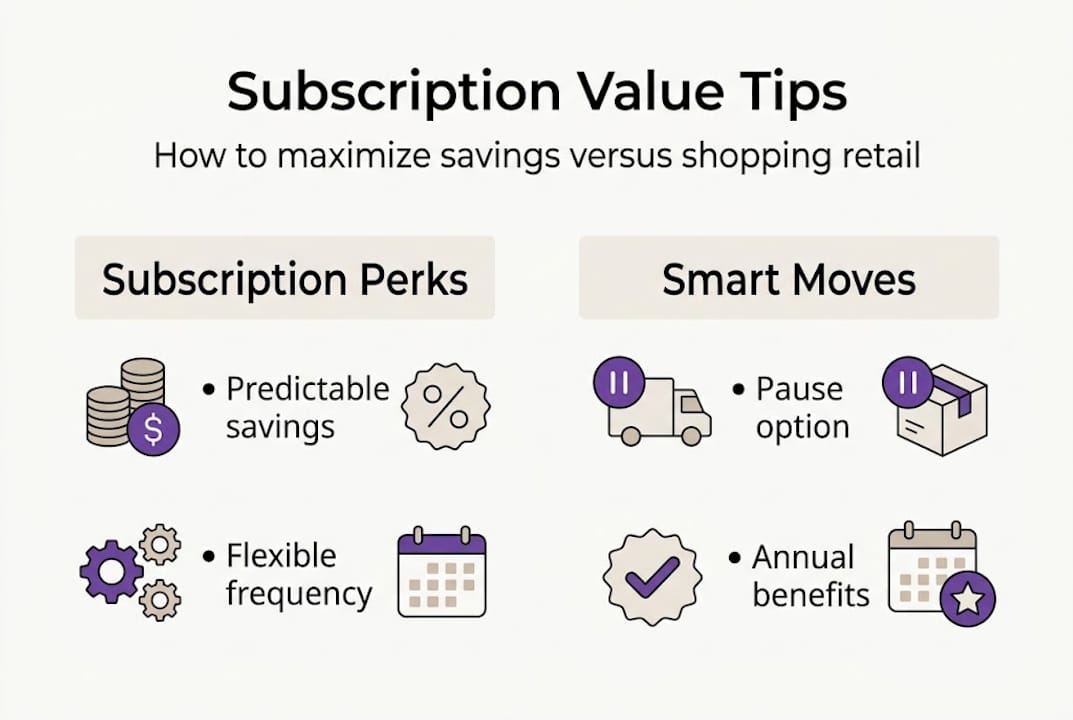
- Using flexibility features like pauses and skips helps maximize long-term savings and prevent involuntary churn.
Most budget shoppers know subscription discounts exist. But here’s the thing: very few actually use them to their full potential. A typical “Subscribe & Save” program offers 10-15% off on everyday essentials, from fish oil softgels to broom sets, and yet most people either skip the option entirely or sign up without understanding how to stack the savings. This guide is here to change that. We’ll walk through how subscription discounts work, what the numbers actually look like, where the traps are, and how you can use these programs to get real, lasting value on the home and health products you buy every month anyway.
Table of Contents
- Understanding subscription discounts: The basics and why they matter
- How subscription programs work: Structure, flexibility, and real savings
- Savings and retention: Why subscription models boost lifetime value
- Nuances and pitfalls: Common challenges and advanced tactics for subscribers
- Our take: The overlooked psychology behind subscription discounts
- Maximize your value today: Budget essentials, smart subscriptions, and more
- Frequently asked questions
Key Takeaways
| Point | Details |
|---|---|
| 10-15% typical discounts | Subscription discounts routinely offer 10-15% off essentials, making everyday savings easy for budget shoppers. |
| Annual plans cut churn | Annual subscriptions reduce cancellations by 40%, increasing retention and overall value. |
| Bundling boosts savings | Combining products or services in bundles can increase effective savings beyond the base discount. |
| Churn tools maximize value | Features like pauses, skips, and dunning help shoppers avoid common pitfalls and keep discounts intact. |
Understanding subscription discounts: The basics and why they matter
Let’s start simple. A subscription discount is a reduced price you get in exchange for committing to receive a product on a recurring schedule. Think of it like a loyalty handshake between you and a retailer. You promise to keep buying, and they reward you with a lower price and the convenience of automatic delivery.
The most well-known version is the “Subscribe & Save” model, but it shows up in lots of forms. Some retailers offer monthly plans, others push annual commitments, and some build tiered systems where the more you subscribe to, the more you save. Understanding the role of discounts in your shopping strategy is the first step toward using them wisely.
Here’s what subscription discounts typically look like in practice:
- ✅ Subscribe & Save programs: Usually 10-15% off per item, applied automatically at checkout
- ✅ Monthly subscription plans: Flat rate discount on a curated product or bundle, billed each month
- ✅ Annual subscription plans: Larger upfront commitment with a higher effective discount, often 15-17%
- ✅ Tiered membership programs: Discount levels that increase as you subscribe to more products
- ✅ Bundle subscriptions: Savings applied when you group multiple items into one recurring order
For budget-friendly shopping, these programs are genuinely useful. You’re not just saving money on a one-time purchase. You’re locking in a lower price on things you’ll buy regardless, like omega-3 supplements, cleaning supplies, or personal care items.
“Subscription discounts, often 10-15% off via ‘Subscribe & Save’ programs, enable budget-conscious shoppers to maximize value on essentials by providing predictable savings and automatic delivery.” — AHS subscription strategies
The real value here isn’t just the percentage. It’s the predictability. You know what you’re paying. You don’t have to remember to reorder. And over a full year, those 10-15% savings add up to something meaningful, especially if you’re buying health supplements or household essentials every single month.
How subscription programs work: Structure, flexibility, and real savings
Now that you know what subscription discounts are, let’s look at how these programs are actually built. Because the structure matters a lot when you’re trying to get the most out of them.

Most subscription programs fall into one of three categories: basic monthly plans, premium tiered plans, or annual commitments. Each has its own savings profile.
| Plan type | Typical discount | Flexibility | Best for |
|---|---|---|---|
| Monthly basic | 10-12% | High (cancel anytime) | New subscribers |
| Annual plan | 15-17% | Medium (locked in) | Long-term essentials |
| Tiered/bundled | 12-20% | Varies | Multi-product buyers |
According to subscription pricing research, annual plans typically deliver around a 17% effective discount when you factor in the full year. That’s noticeably better than a standard monthly plan. And annual plans reduce churn by 40% while tiered structures increase retailer revenue by 60%, which tells you something important: these programs are designed to keep you engaged, and they work.
Here’s how to approach a subscription program step by step:
- Start with a monthly plan to test delivery timing and product quality before committing long-term
- Evaluate your usage after 60 days to confirm you’re going through the product at the expected rate
- Switch to an annual plan if the product is a true staple in your routine
- Add bundle items to unlock deeper discounts where available
- Use pause and skip features during months when you have leftover stock
One feature most shoppers overlook is delivery frequency flexibility. You can often change how often a product ships, monthly, every six weeks, every two months, without losing your discount. This is huge for saving money on essentials because it means you’re never paying for product you don’t need yet.
Pro Tip: Before committing to an annual plan, check whether the retailer offers a pause or skip option. If they do, the annual plan becomes much lower risk and much higher reward for budget-friendly daily essentials you use consistently.
Savings and retention: Why subscription models boost lifetime value
Here’s where the numbers get really interesting. Subscription models aren’t just good for shoppers. They’re built around keeping you engaged, and that dynamic actually works in your favor when you understand it.
Let’s talk churn. In the subscription world, churn means cancellation. For home and health product subscriptions, monthly churn runs 6-8%, which sounds small but adds up fast. Retailers know this, so they build in features designed to keep you around. Those features, like pauses, skips, loyalty perks, and escalating discounts, are tools you can use to your advantage.
Here’s a quick comparison of what subscribers gain versus one-time buyers:
| Metric | One-time buyer | Subscriber |
|---|---|---|
| Average discount | 0-5% | 10-17% |
| Delivery convenience | Manual reorder | Automatic |
| Lifetime value (LTV) | Baseline | 3-5x higher |
| Retention rate | Low | 23% higher |
Subscribers carry 3-5x higher lifetime value than one-time purchasers. Retailers know this, which is exactly why they offer the discounts in the first place. It’s a trade. They give you a lower price; you give them predictable revenue. When you understand that dynamic, you can negotiate it more confidently.
For practical home and health products, this matters a lot. Think about oregano oil softgels or omega-3 fish oil. These aren’t impulse buys. You take them daily. Subscribing to them isn’t a risk; it’s just smart planning. And the deal hunting tips that work best are the ones tied to products you already know you’ll use.
- ✅ Annual subscribers cancel 40% less often than monthly subscribers
- ✅ Home health subscriptions improve retention by 23% compared to one-off purchases
- ✅ Subscribers save an average of 10-17% per order over time
- ✅ Automatic delivery reduces the chance of running out of essential products
The bottom line is simple. If you’re buying the same home or health product every month, not subscribing is leaving real money on the table.
Nuances and pitfalls: Common challenges and advanced tactics for subscribers
Okay, so subscriptions sound great. And they are, mostly. But there are a few traps worth knowing about before you sign up for everything in your cart.
The biggest one is involuntary churn. This happens when a payment fails, usually because a card expired or a bank flagged the charge. Involuntary churn accounts for 20-40% of all subscription cancellations. The good news is that most of it is recoverable through dunning, which is the process of retrying failed payments and notifying you to update your info. Retailers recover 60-80% of these cases. But if you miss the notification, you lose your discount tier and sometimes your locked-in price.
Here’s how to protect yourself and get the most from your subscription:
- Keep your payment info current and set a calendar reminder to check it every six months
- Use a dedicated card for subscriptions so you always know which one to update
- Enable email notifications for billing failures so you can act fast
- Use pause features instead of canceling when you’re overstocked. Pausing cuts voluntary churn by 30-40% and keeps your discount intact
- Look for deeper discounts on short-lifecycle products like cleaning supplies or single-use health items, which often carry better deals than long-lasting goods
There’s also a psychological layer here that’s worth understanding. Retailers use loss aversion and anchoring to make subscription discounts feel more compelling. When you see “Save 15% by subscribing,” your brain registers the potential loss of that 15% if you don’t subscribe. That’s not manipulation exactly. It’s just how pricing psychology works. Knowing this helps you make clearer decisions about which subscriptions are genuinely useful versus which ones just feel urgent.
“Inertia is one of the most powerful forces in subscription behavior. Once someone is subscribed, they tend to stay subscribed, which is why retailers invest so heavily in the onboarding experience.”
Pro Tip: If you’re unsure whether a product is worth subscribing to, check your saving money online tips and look for a free trial or introductory offer first. Longer trials boost conversion by 11%, which means retailers often offer them. Use that window to evaluate the product before committing. And always check whether the daily value products you’re considering have a pause option built in.
Our take: The overlooked psychology behind subscription discounts
Here’s something most articles won’t tell you. The biggest reason budget shoppers miss out on subscription savings isn’t ignorance. It’s inertia, just pointed in the wrong direction.
Most people are in a habit of buying things one at a time. It feels safer. No commitment, no risk. But that same inertia, once redirected toward a subscription, becomes incredibly powerful. Inertia boosts seller revenue by 87-120% over time, and the same force works for you as a shopper once you’re locked into a good deal.
The shoppers who get the most value from subscriptions aren’t the ones chasing the biggest visible discount. They’re the ones who pay attention to retention features, pauses, skips, and flexible frequencies, because those tools are what protect the discount long-term. A 15% savings that you maintain for 18 months beats a 20% deal you cancel after two.
Our advice? Stop thinking about subscription discounts as a one-time decision. Think of them as a living part of your smart shopping strategies. Review your subscriptions every quarter. Adjust frequencies. Pause when needed. That’s how you turn a simple discount into a genuine, ongoing financial win.
Maximize your value today: Budget essentials, smart subscriptions, and more
If this guide has you thinking differently about how you shop for everyday essentials, that’s exactly the point. The savings are real. The tools are there. You just need to know where to look and how to use them.

At Secret Finds, we’ve curated a collection of practical home and health products that pair perfectly with subscription-style savings. Whether you’re stocking up on health supplements or refreshing your cleaning supplies, our everyday essentials guide is a great place to start. You can also explore our budget-friendly daily essentials picks or browse our selection of health supplements online to find products worth subscribing to. Smart shopping starts with the right products and the right strategy.
Frequently asked questions
How much do subscription discounts typically save on essentials?
Most subscription discounts provide 10-15% savings on practical home and health items, with deeper deals available through bundling or annual commitments.
Are annual subscription plans better than monthly?
Annual plans usually offer a higher effective discount of up to 17% and reduce churn by 40%, making them the better choice for long-term essentials you use consistently.
What are the main risks when using subscription discounts?
The biggest risks are involuntary churn from payment failures, which accounts for 20-40% of cancellations, and missing out on deeper savings by not exploring bundling or plan modifications.
How does subscription shopping benefit budget-conscious buyers?
Subscription shopping delivers automatic delivery and predictable savings on essential products, reducing both costs and the hassle of remembering to reorder every month.