
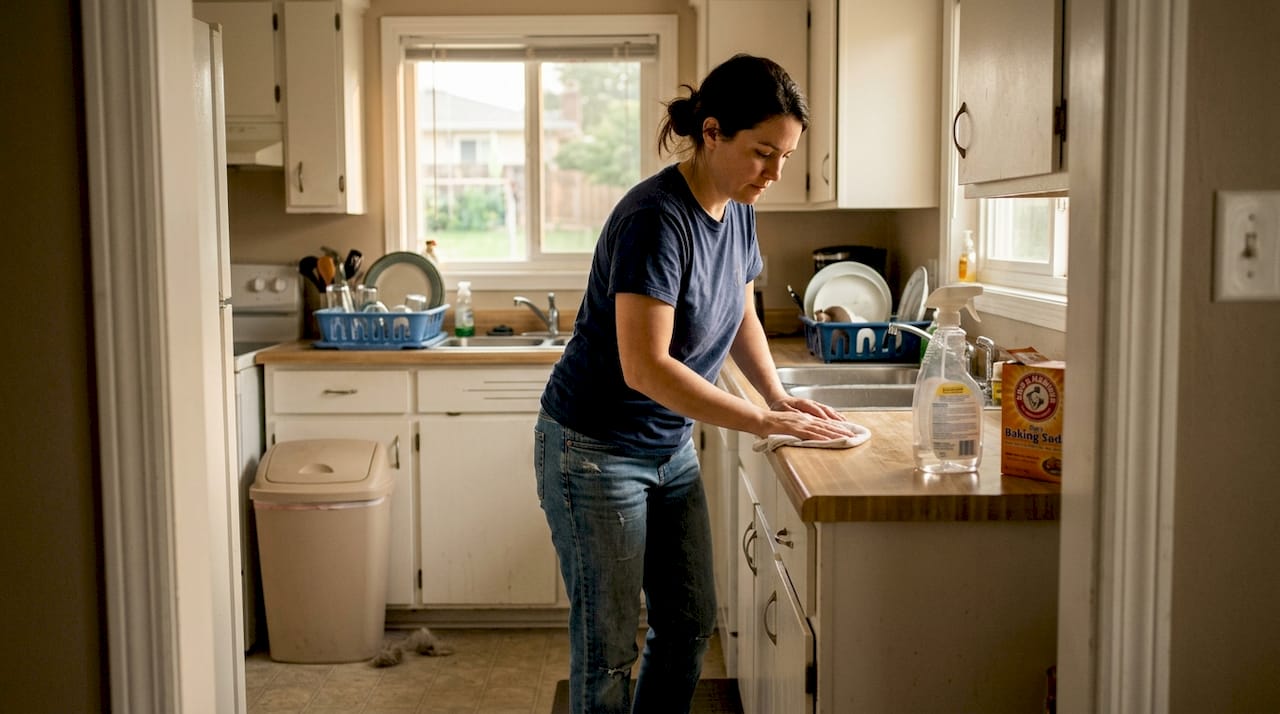
Keeping a clean home shouldn’t drain your wallet or consume your weekends. Many budget-conscious homeowners and renters struggle to maintain consistent cleaning routines without overspending on supplies or wasting precious time on inefficient methods. This comprehensive guide delivers a practical, cost-effective home cleaning checklist that transforms overwhelming chores into manageable tasks. You’ll discover expert strategies for room-by-room cleaning, learn which affordable supplies deliver professional results, and master time-saving techniques that reduce cleaning time by up to 40% while staying within your budget.
Table of Contents
- Key takeaways
- How to choose the right cleaning method
- Essential supplies for budget-friendly cleaning
- Room-by-room cleaning checklist for efficient home maintenance
- Cleaning frequency and special considerations for renters
- Explore budget-friendly cleaning supplies and home essentials
- Frequently asked questions
Key Takeaways
| Point | Details |
|---|---|
| Top to bottom cleaning | Starting at ceilings and moving downward saves up to forty percent of cleaning time. |
| Color coded cloths | Color coded microfiber cloths prevent cross contamination between rooms by assigning blue for bathrooms yellow for kitchens and green for general dusting. |
| Budget friendly supplies | A basic starter kit costs about fifteen to fifty dollars and handles most tasks without breaking your budget. |
| Room by room approach | This method helps prevent burnout and keeps tasks organized throughout the home. |
How to choose the right cleaning method
Selecting an effective cleaning method means balancing three critical factors: time efficiency, cost-effectiveness, and thoroughness. The top-to-bottom cleaning approach leverages gravity to your advantage, starting from ceilings and light fixtures, moving to mid-level surfaces like furniture and counters, and finishing with floors. This systematic method reduces cleaning time by 30-40% because dust and debris naturally fall downward, eliminating the frustrating need to re-clean lower surfaces.
When evaluating cleaning methods, prioritize simplicity over complexity. Complicated multi-step processes often lead to abandoned routines and wasted money on specialized products you’ll never use again. The top-to-bottom approach works because it requires no special training, adapts to any room size, and uses basic supplies you already own. Start at the highest point in each room, whether that’s ceiling fans, crown molding, or tall shelves, then work methodically downward through countertops, furniture, and baseboards before vacuuming or mopping floors.
This methodology particularly benefits renters and budget-conscious homeowners because it maximizes results from minimal supplies. You’re not buying different products for each surface or cleaning the same area multiple times. The method also integrates seamlessly with home storage and organization systems, as organized spaces clean faster and stay cleaner longer.
Pro Tip: Move in a circular pattern within each room as you clean top-to-bottom, starting at the door and working clockwise around the perimeter. This systematic approach ensures you never miss a surface and prevents the common mistake of randomly jumping between areas, which wastes time and energy.
Essential supplies for budget-friendly cleaning
You don’t need expensive specialty cleaners to achieve professional results. A basic starter kit costs around $15-50 and includes all-purpose cleaner, baking soda, white vinegar, dish soap, microfiber cloths, rubber gloves, and scrubbing sponges. These fundamental supplies handle 95% of household cleaning tasks without breaking your budget or exposing your family to harsh chemicals.
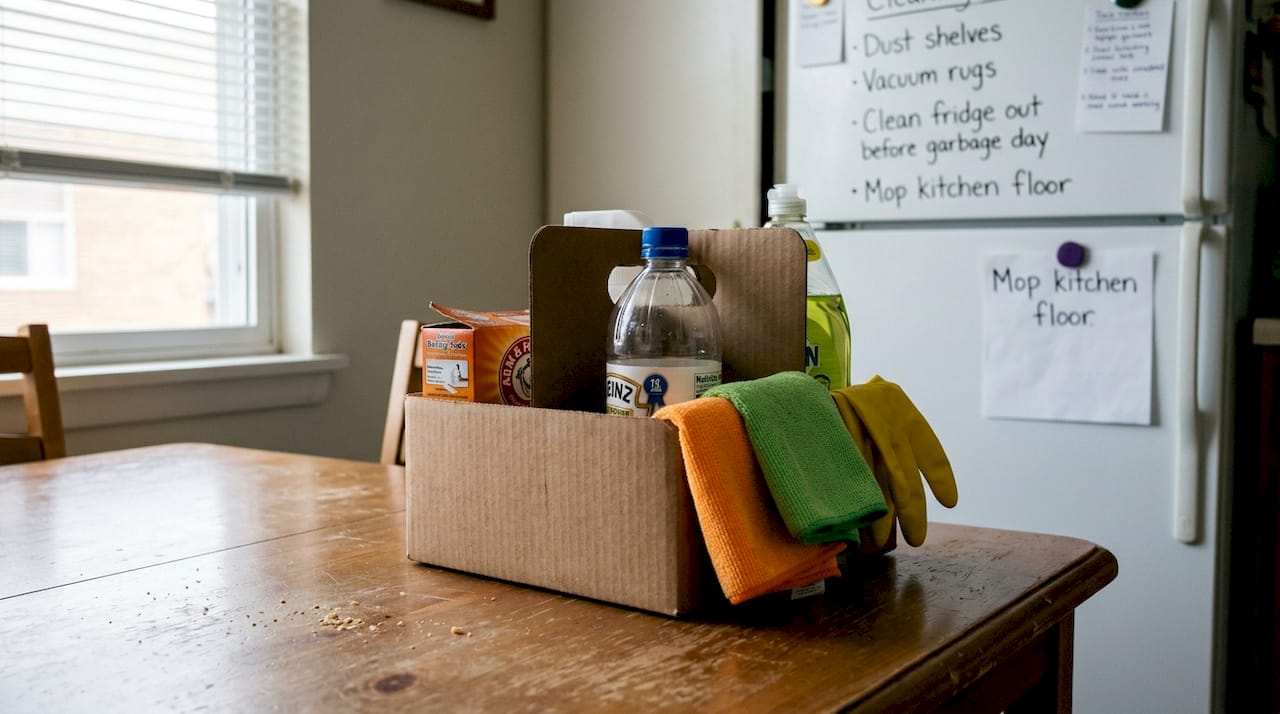
Microfiber cloths represent one of the smartest investments for budget cleaning. Color-code your cloths by room or task: blue for bathrooms, yellow for kitchens, green for general dusting. This simple system prevents cross-contamination that can spread bacteria from toilets to kitchen counters. Each cloth lasts hundreds of washes and outperforms disposable paper towels while saving you money over time.
White vinegar and baking soda form the foundation of natural, budget-friendly cleaning. Vinegar cuts through grease, dissolves soap scum, and eliminates odors for about $2 per gallon. Baking soda acts as a gentle abrasive for scrubbing sinks, tubs, and stovetops without scratching surfaces. Mix them together for a fizzing action that clears drain clogs and lifts stubborn stains. These pantry staples replace dozens of specialized cleaners that cost $5-8 each.
Rubber gloves protect your hands during cleaning tasks and cost less than $3 per pair. Choose gloves with textured palms for better grip when handling wet surfaces or slippery bottles. Dish soap deserves a spot in your cleaning arsenal beyond just washing dishes. It cuts grease on kitchen surfaces, removes sticky residue, and even cleans windows when diluted with water.
Pro Tip: Before you start cleaning any room, declutter using a three-bin system labeled trash, donate, and relocate. Removing unnecessary items first makes cleaning 50% faster because you’re not constantly moving clutter around. This approach particularly helps renters maximize limited storage space while maintaining cleaner living areas. Check out budget-friendly daily essentials for affordable organization solutions, and consider a quality household sweeping broom set that makes floor cleaning effortless.
Room-by-room cleaning checklist for efficient home maintenance
Breaking your cleaning routine into room-specific tasks prevents burnout and creates manageable daily or weekly goals. The room-by-room approach ensures thorough coverage while allowing you to focus energy where it matters most. Each room has unique high-traffic areas and surfaces that require different attention levels and frequencies.
Kitchen cleaning demands the most frequent attention due to food preparation and potential bacterial growth. Essential tasks include cleaning oven interiors monthly, vacuuming refrigerator coils quarterly to maintain efficiency, wiping down backsplash tiles weekly to prevent grease buildup, sanitizing countertops daily after meal prep, and deep cleaning the sink and disposal weekly. Don’t overlook the tops of cabinets and range hood, which accumulate sticky grease film that becomes harder to remove over time.
Bathroom maintenance focuses on moisture control and sanitization. Scrub tile grout monthly with a baking soda paste to prevent mold growth, wash shower curtains or liners weekly in the washing machine, sanitize toilet, sink, and tub fixtures at least twice weekly, and wipe down mirrors and chrome daily to prevent water spot buildup. Pay special attention to the area around the toilet base and behind the tank, where dust and moisture create ideal conditions for bacteria.
Bedroom cleaning prioritizes allergen reduction and air quality. Vacuum under the bed monthly to remove dust bunnies and allergens, rotate your mattress every three months to extend its lifespan and maintain even wear, dust all furniture surfaces including tops of dressers and nightstands weekly, and wash bedding in hot water weekly to eliminate dust mites. Change pillowcases twice weekly if you have acne-prone skin or allergies.
Living room tasks maintain the communal space where families spend most of their time. Vacuum upholstered furniture monthly using the attachment tool to remove embedded dirt and pet hair, dust electronics weekly with microfiber cloths to prevent overheating from blocked vents, organize storage solutions to reduce visual clutter, and vacuum or sweep floors twice weekly in high-traffic areas.
| Room | Weekly Tasks | Monthly Tasks | Quarterly Tasks |
|---|---|---|---|
| Kitchen | Counters, sink, floors, backsplash | Oven interior, cabinet fronts | Refrigerator coils, deep pantry clean |
| Bathroom | Fixtures, mirrors, floors, shower | Grout scrubbing, exhaust fan | Deep tile cleaning, re-caulk if needed |
| Bedroom | Bedding, dusting, vacuuming | Under bed, closet organization | Mattress rotation, window treatments |
| Living Room | Dusting, vacuuming, organizing | Upholstery vacuum, baseboards | Deep carpet clean, behind furniture |
For renters dealing with smaller spaces, consider checking home appliances that simplify maintenance tasks. Additional deep cleaning strategies for apartments provide move-in and move-out specific guidance that helps you recover security deposits.
Cleaning frequency and special considerations for renters
Understanding optimal cleaning frequencies helps you allocate time and energy efficiently without over-cleaning or letting tasks pile up. Americans clean kitchens about 20 times monthly and bathrooms 16-20 times monthly, reflecting the higher contamination risk in these areas. Living rooms and bedrooms typically receive attention 14-17 times per month, balancing visible cleanliness with practical time constraints.
Deep cleaning typically happens once or twice yearly for homeowners, but renters face different considerations. Small apartment dwellers, especially in cities like New York where spaces are compact and windows stay closed much of the year, often benefit from quarterly deep cleans. These intensive sessions tackle overlooked areas like baseboards, behind appliances, inside cabinets, and window tracks that accumulate grime faster in smaller spaces with less air circulation.
Move-in and move-out cleaning presents unique challenges for renters who want to recover full security deposits. Expect to spend 3-6 hours on a thorough apartment cleaning, focusing on high-touch areas landlords inspect closely: kitchen appliances inside and out, bathroom grout and fixtures, window sills and tracks, baseboards throughout, and any wall marks or scuffs. Document your cleaning with photos to protect against unfair deposit deductions.
Renters should prioritize different areas than homeowners because you’re maintaining property you don’t own and may face inspection. Focus extra attention on preventing permanent damage: use coasters religiously to avoid water rings on wood surfaces, clean spills immediately before they stain carpets, wipe down painted walls monthly to prevent buildup that requires repainting, and address mold or mildew in bathrooms immediately before it spreads.
| Factor | Renters | Homeowners |
|---|---|---|
| Deep clean frequency | Quarterly in small spaces, move-in/out | 1-2 times per year |
| Time per deep clean | 3-6 hours for apartments | 6-10 hours for houses |
| Priority focus | Deposit recovery, preventing damage | Long-term maintenance, value preservation |
| Overlooked areas | Baseboards, behind appliances, window tracks | Gutters, HVAC filters, exterior maintenance |
Pro Tip: During quarterly deep cleans in rental properties, prioritize three often-overlooked areas that impact your health and deposit: vacuum refrigerator coils to prevent fire hazards and improve efficiency, clean baseboards throughout to remove allergen buildup, and pull out furniture to vacuum and wipe walls behind beds and sofas where dust accumulates unseen. These tasks take 30 minutes total but make dramatic differences in air quality and landlord inspections. Efficient storage and organization makes these deep cleaning sessions faster by keeping items accessible and spaces uncluttered.
Explore budget-friendly cleaning supplies and home essentials
Now that you understand effective cleaning methods and room-specific checklists, the next step is equipping yourself with the right tools without overspending. Quality doesn’t require premium prices when you know what to look for. Browse budget storage and organization products that help maintain the clean spaces you’ve worked hard to achieve. Keeping cleaning supplies organized and accessible makes it easier to stick with your new routine.

Consider starting with an affordable broom and dustpan set that makes daily floor maintenance effortless. The right tools transform tedious chores into quick tasks you can complete during commercial breaks. Explore home cleaning appliances that automate repetitive tasks, freeing your time for activities you actually enjoy. Investing in a few quality essentials pays dividends through years of reliable use and consistently cleaner living spaces.
Frequently asked questions
What is the best order to clean a room?
Always clean from top to bottom, starting with ceiling fans, light fixtures, and high shelves, then moving to mid-level surfaces like counters and furniture, and finishing with floors. This method prevents dust and debris from falling onto already-cleaned surfaces, saving you from having to clean the same areas twice. Use a circular pattern around the room’s perimeter to ensure complete coverage without missing spots.
How often should I deep clean my home?
Most homeowners deep clean once or twice per year, typically in spring and fall. However, renters in smaller apartments or urban environments may benefit from quarterly deep cleaning sessions every three months. Regular weekly maintenance of high-traffic areas significantly reduces the intensity required during deep cleans and prevents overwhelming buildup.
What are budget-friendly cleaning supplies to start with?
Begin with all-purpose cleaner, baking soda, white vinegar, dish soap, microfiber cloths, rubber gloves, and scrubbing sponges, which together cost $15-50 for a complete starter kit. These versatile supplies handle nearly every household cleaning task without expensive specialty products. Natural ingredients like vinegar and baking soda offer effective, safe alternatives to harsh chemicals while keeping costs low. Check out budget-friendly cleaning essentials for curated recommendations.
How can I prevent cross-contamination while cleaning?
Use color-coded microfiber cloths designated for specific areas: blue for bathrooms, yellow for kitchens, and green for general dusting. This visual system prevents accidentally using a bathroom cloth on kitchen counters where you prepare food. Wash cleaning cloths in hot water after each use and replace them every few months as they wear out.
What cleaning tasks should renters prioritize before moving out?
Focus on areas landlords inspect most carefully: deep clean kitchen appliances inside and out, scrub bathroom grout and fixtures until spotless, wipe down all baseboards, clean window sills and tracks, and remove any wall marks or scuffs with a magic eraser. Document your cleaning with timestamped photos to protect against unfair security deposit deductions. Allocate 3-6 hours for a thorough move-out clean of a typical apartment.











