

Grocery prices are up, utility bills keep climbing, and somehow the basics feel less basic every month. If you’ve stood in a checkout line lately and felt that quiet panic watching the total rise, you’re not alone. The good news? You don’t have to sacrifice quality of life to keep your household budget intact. This guide walks you through smart, realistic strategies covering meal planning, bulk shopping, utility savings, clothing, and community resources so you can stretch every dollar without feeling like you’re going without.
Table of Contents
- Understand what essentials really mean
- Smart meal planning and grocery savings
- Maximize savings with bulk and store brand shopping
- Cut home utility costs with simple changes
- Stretch every dollar on clothing and personal care
- Tap into community, online, and discount resources
- Boost home savings with Secret Finds Online essentials
- Frequently asked questions
Key Takeaways
| Point | Details |
|---|---|
| Prioritize real essentials | Focus your spending on high-impact, high-use items to avoid wasting money on low-value purchases. |
| Plan and shop smart | Meal planning, store brands, and warehouse clubs deliver big savings on recurring home essentials. |
| Cut recurring costs | Simple changes to thermostat settings and home maintenance noticeably lower utility bills. |
| Use all available resources | Community programs and deal platforms extend your budget without sacrificing quality of life. |
Understand what essentials really mean
Before you can save money on essentials, you need to know what actually counts as essential. It sounds obvious, but most of us blur the line between what we need and what we’ve just gotten used to buying.
True essentials are the things that directly support your health, safety, and daily functioning. Think groceries, utilities, basic hygiene products, and household supplies. Everything else, from subscription boxes to name-brand snacks, falls into the “nice to have” category. As one money coach puts it, frugality prioritizes value over cheapness, meaning you invest in things that last rather than just grabbing whatever’s cheapest.
Here’s a quick way to get clarity:
- Needs: Groceries, electricity, water, basic cleaning supplies, hygiene products, medications
- Wants: Premium brands, convenience foods, decorative items, impulse buys
- Gray area: Streaming services, gym memberships, specialty foods (evaluate based on your lifestyle)
The goal isn’t to strip your life bare. It’s to make sure your money goes toward things that genuinely improve your day-to-day. Exploring budget must-haves can help you build a clearer picture of where your dollars should go.
Pro Tip: Grab a piece of paper and draw two columns: “Needs” and “Wants.” Write down every recurring monthly purchase. You’ll probably surprise yourself with what ends up in the “Wants” column.
Smart meal planning and grocery savings
For most families, groceries are the single biggest flexible expense in the budget. And flexible means changeable. This is where real savings happen.
The USDA Thrifty Food Plan benchmarks monthly grocery costs for a family of four at around $1,300. That’s a significant chunk of any household income, and it’s worth fighting for every dollar of savings there.
Here’s a simple weekly meal planning process:
- Check your pantry and fridge before planning anything
- Choose 5 to 7 meals for the week, including one or two “use what you have” nights
- Write a specific shopping list based only on what those meals require
- Stick to the list, no detours through the snack aisle
- Shop the outer aisles of the store first, where fresh produce, proteins, and dairy live
“Meal planning and sticking to the store periphery reduces impulse buys and waste significantly.”
Comparing store brands to name brands is one of the fastest wins available. Generic pasta, canned goods, and cleaning products often come from the same manufacturers. You can find a full breakdown of budget-friendly daily essentials to help you identify where swapping brands makes the most sense.
| Category | Name brand avg. cost | Store brand avg. cost | Estimated savings |
|---|---|---|---|
| Canned vegetables | $1.80 | $1.10 | 39% |
| Pasta (1 lb) | $2.50 | $1.60 | 36% |
| Cleaning spray | $4.20 | $2.80 | 33% |
| Breakfast cereal | $5.00 | $3.20 | 36% |
Pro Tip: Before heading to the store, spend two minutes checking unit prices on your phone using the store’s app. It takes almost no time and can save you $10 to $20 per trip. Pairing this habit with smart shopping online can double your savings even faster.
Maximize savings with bulk and store brand shopping
With your grocery list set, your next advantage lies in how and where you shop for staples, cleaning goods, and basic home supplies.
Buying in bulk works best for non-perishables: paper towels, dish soap, canned goods, rice, and dried beans. Store brands and generics save 15 to 25% and often match name-brand quality, making them a reliable default for most household staples.
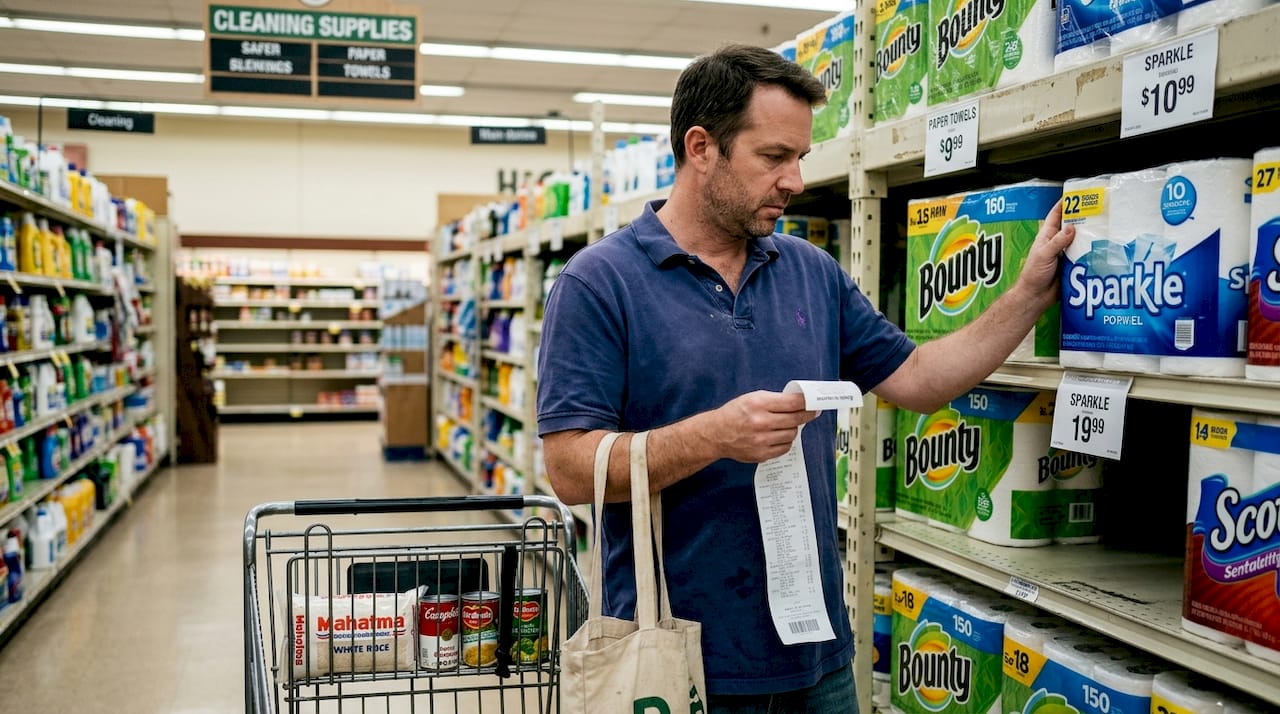
Warehouse clubs take that further. Warehouse clubs like Costco offer the lowest prices for 67% of tested cleaning supplies and paper goods. If you go through these items quickly, the membership fee pays for itself fast.
Not near a warehouse club? Shopping at discounters like Aldi can save up to 33% compared to premium supermarkets. That’s real money, especially on a tight budget.
Here’s a quick comparison to help you decide where to shop:
| Store type | Best for | Avg. savings vs. premium |
|---|---|---|
| Warehouse club | Bulk non-perishables, paper goods | 20 to 30% |
| Discount grocer (Aldi) | Weekly groceries, produce | Up to 33% |
| Store brand at any chain | Everyday staples | 15 to 25% |
- ✅ Buy cleaning supplies, paper goods, and canned foods in bulk
- ✅ Default to store brands unless you’ve tested and genuinely prefer the name brand
- ✅ Compare membership fees against your actual buying habits before joining a warehouse club
- ✅ Check out discover useful products for curated home essentials at honest prices
Pro Tip: Before any bulk purchase, open your pantry and count what you already have. Overbuying leads to waste, which cancels out the savings entirely.
Cut home utility costs with simple changes
Groceries are just one piece. Managing your home’s recurring expenses brings the biggest long-term savings, and utility bills are one of the most overlooked areas.
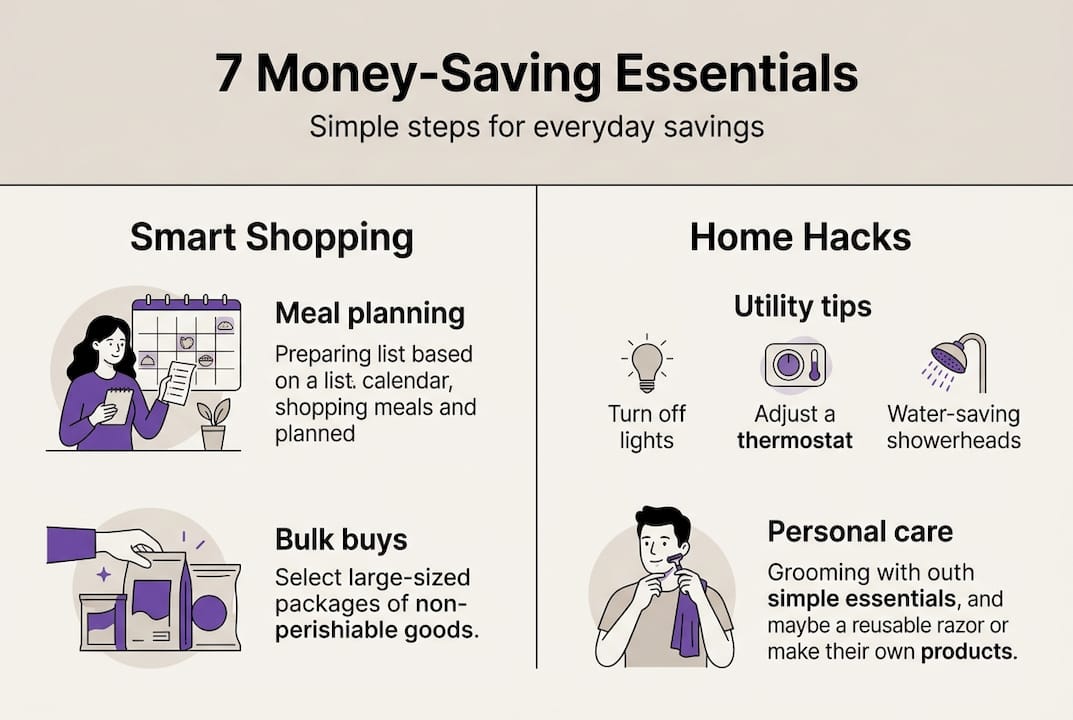
Small adjustments add up faster than you’d expect. Lowering your thermostat 7 to 10°F for 8 hours a day can save up to 10% on heating, and sealing drafts saves around $27 a month. That’s over $300 a year just from weatherstripping and a programmable thermostat.
Here’s a practical action list:
- Set your thermostat lower at night and while you’re at work
- Seal gaps around windows and doors with weatherstripping or caulk
- Switch to LED bulbs throughout your home
- Unplug electronics and chargers when not in use (they draw power even when idle)
- Run dishwashers and washing machines during off-peak hours if your utility offers time-of-use pricing
$324 per year is the average savings from sealing drafts and adjusting thermostat habits, according to Consumer Reports.
Pro Tip: Call your utility provider and ask if they offer a time-of-use plan. In many areas, running appliances after 9 p.m. costs significantly less per kilowatt-hour. It’s a free change that can shave real dollars off your monthly bill.
Stretch every dollar on clothing and personal care
Once utilities are optimized, wardrobe and self-care are next. These areas can quietly drain your budget unless you approach them with a plan.
The key mindset shift here is thinking in cost-per-wear rather than sticker price. A $60 pair of jeans you wear 100 times costs you $0.60 per wear. A $20 trendy pair you wear five times costs $4.00 per wear. Investing in cost-per-wear basics consistently outlasts buying frequent cheap, trendy items.
For personal care, multi-use products are your best friend. A good moisturizer that doubles as a primer, or a shampoo bar that lasts three times longer than a bottle, saves money and cabinet space. You can browse affordable self-care accessories that are built for everyday use without the premium price tag.
- ✅ Build a small wardrobe of quality basics: neutral tees, one good pair of jeans, versatile shoes
- ✅ Shop thrift stores for seasonal or trendy pieces you won’t wear long-term
- ✅ Choose multi-use personal care products over single-purpose ones
- ✅ Track clothing and self-care spending monthly to catch creeping costs early
Pro Tip: Set a monthly “personal care” budget line in your spending tracker. Even $5 over budget every week adds up to $260 a year in unplanned spending.
Tap into community, online, and discount resources
Even after optimizing individual spending categories, tapping community and digital resources supercharges your overall savings. These tools are underused, and there’s genuinely no reason to leave them on the table.
Local food banks and community pantries are there for exactly this kind of moment. As one reader shared in a grocery savings discussion, fixed-income shoppers should use food banks and community resources without stigma. Providing for your family is what matters, not how you do it.
Beyond food banks, here are resources worth exploring:
- Buy Nothing groups: Neighborhood Facebook groups where people give away household items, clothing, and food for free
- Community swaps: Local events where you trade items you no longer need for things you do
- Government assistance programs: SNAP, WIC, and LIHEAP (energy assistance) are available to qualifying households
- Online deal platforms: Sites like Rakuten, Honey, and RetailMeNot surface coupons and cashback automatically
- Discount grocery apps: Flashfood and Too Good To Go sell near-expiry food at steep discounts
For home cleaning specifically, building smart habits around what you already own goes a long way. Check out these home cleaning tips for practical, low-cost routines that keep your space in shape without expensive products.
Pro Tip: Set a calendar reminder once a month to check for new local resources, updated government program eligibility, and fresh online coupon codes. Savings opportunities change constantly, and a quick 10-minute check can pay off well.
Boost home savings with Secret Finds Online essentials
After using the strategies outlined above, the next step is making sure the products you do buy are actually worth your money. That’s exactly what Secret Finds Online is built for.

We hand-pick practical, affordable essentials for home, health, and self-care so you’re not wasting time hunting for hidden gems on your own. Whether you’re looking for a guide to budget must-haves, smart budget storage solutions to keep your home organized, or reliable self-care essentials that won’t break the bank, we’ve got you covered. Every product we feature is chosen with value, durability, and real everyday use in mind. Because saving money shouldn’t mean settling for less.
Frequently asked questions
What are the best essentials to buy in bulk?
Non-perishable foods, cleaning supplies, and paper goods are ideal for bulk buying to reduce per-unit costs. Warehouse clubs offer the lowest prices for 67% of tested cleaning and paper products, making them a smart starting point.
Does buying store brands really save money?
Yes, consistently. Store brands save 15 to 25% compared to name brands on most everyday staples, and quality is often identical since many come from the same manufacturers.
How can I reduce monthly energy bills at home?
Lowering your thermostat 7 to 10°F for part of the day and sealing drafts can cut heating costs by up to 10% and save roughly $27 per month, adding up to over $300 annually.
Are food banks a good option if I’m struggling to afford groceries?
Absolutely. Food banks are a legitimate, valuable resource for anyone on a tight or fixed income. Using them is a smart financial decision, not something to feel embarrassed about.
How do I know if a sale is actually a good deal?
Always check the unit price and compare it against your last receipt or a competing store. Overbuying in bulk can lead to waste that wipes out any savings, so unit pricing is your most reliable guide.











