TL;DR:
- Most Black Friday discounts are inflated, with real savings often only around 5.5%.
- Retailers use tiered, bundle, and dynamic discounts to influence buying behavior and protect margins.
- Smarter shopping involves tracking prices, stacking discounts, and focusing on genuine value over impulse deals.
Most shoppers assume a big discount tag means big savings. But that’s not always the story. Black Friday discounts average 28 to 38%, yet real savings can shrink to just 5.5% once you factor in pre-sale price inflation. That gap is eye-opening. If you shop for health supplements, household tools, or everyday essentials online, understanding how discounts actually work can mean the difference between a genuine deal and a cleverly disguised full price. This article breaks down the real mechanics of e-commerce discounts so you can shop smarter, save more, and stop falling for the illusion of a bargain.
Table of Contents
- Why discounts matter: Acquisition, retention, and risk
- Types of discounts: Which options deliver real value?
- Are advertised savings real? Price inflation, elasticity, and true value
- Smart strategies for budget-conscious shoppers: Maximizing value
- The uncomfortable truth: When discounts fail shoppers
- Find smarter deals for health and daily essentials
- Frequently asked questions
Key Takeaways
| Point | Details |
|---|---|
| Strategic discounts matter | Using the right discount types can attract new customers and increase savings, but habitual deals may reduce profit margins. |
| Understand real vs. advertised savings | True discounts often fall below advertised rates due to price inflation, so always verify with price history and product comparisons. |
| Stacking delivers biggest wins | Combining subscribe-and-save, cashback, and loyalty points provides maximum savings—especially for health and daily essentials. |
| Beware discount pitfalls | Frequent discounting can train shoppers to avoid full price, and AI-driven deals may create ‘fake’ savings if not checked. |
Why discounts matter: Acquisition, retention, and risk
Having set the context, let’s dive into why discounts are central to e-commerce success and what hidden costs they create for both retailers and shoppers like you.
Discounts are not just about saving money. For online stores, they are a growth engine. A well-timed deal can pull in a first-time buyer who would never have clicked otherwise. For you as a shopper, a discount can feel like an invitation. It lowers the risk of trying something new. And that feeling is backed by real data.
88% of shoppers try new brands because of discounts, and 57% say they would not buy at all without a coupon. That is a massive influence on buying behavior. It also explains why your inbox is flooded with promo codes every week.
But here is where it gets complicated. When discounts become the norm, shoppers start waiting for them. They stop buying at full price. Retailers then feel pressure to discount more often just to keep sales moving. It becomes a cycle that is hard to break.
“The danger of frequent discounting is that it trains customers to expect deals, making full-price purchases feel like a mistake.”
This is not just a theory. It has played out with major retailers who leaned too hard on promotions and ended up eroding customer trust in their pricing altogether. For you as a budget-conscious shopper, this matters because it means some prices you see are already inflated to make future discounts look more impressive.
The smarter retailers use tiered and dynamic discounts to protect their margins while still rewarding loyal buyers. Tiered discounts give you more savings the more you spend. Dynamic discounts shift based on demand, time, or your shopping history. Both approaches can work in your favor if you know how to spot them.
Here is what discounts do well when used strategically:
- ✅ Attract first-time buyers to new product categories
- ✅ Reward loyal customers without devaluing the brand
- ✅ Move slow inventory while keeping margins healthy
- ✅ Create urgency that helps shoppers commit to a purchase
If you want a solid foundation for navigating this, our budget health buyers guide is a great starting point. And if you are already hunting deals, these deal hunting tips can help you avoid the most common traps.
Types of discounts: Which options deliver real value?
With risks and benefits established, the next question is: which discount types actually help shoppers save the most?
Not all discounts are created equal. Some look great on the surface but deliver minimal real savings. Others are quietly powerful, especially for people buying health products or practical household goods regularly.
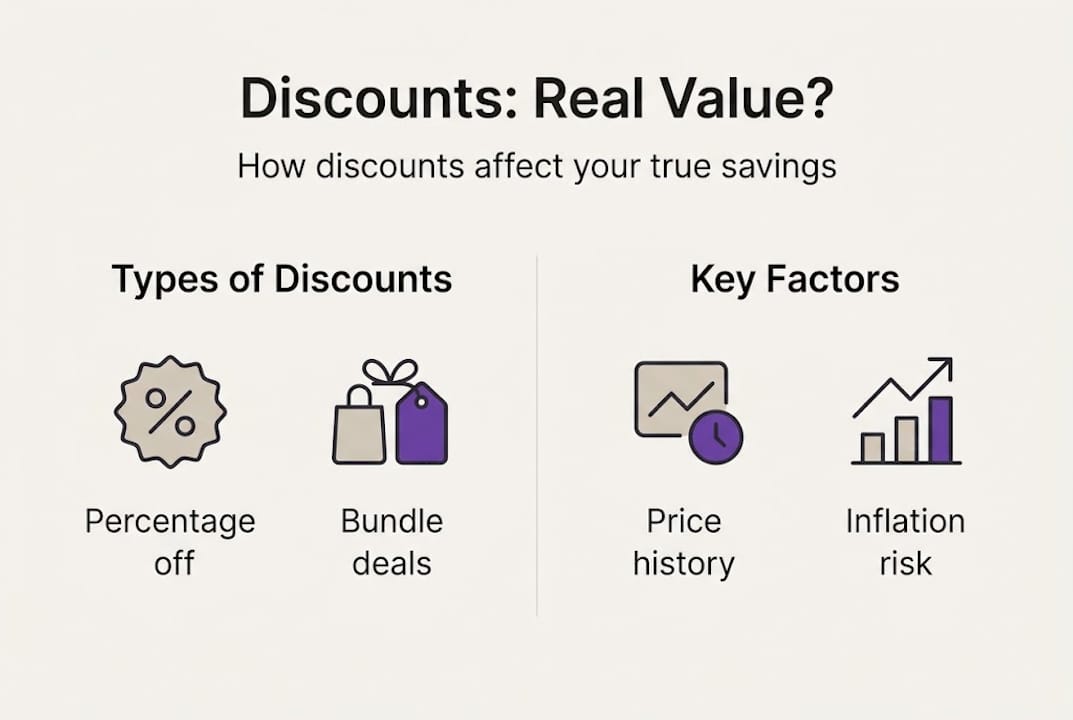
Percentage-based discounts are preferred by 60% of consumers, and it is easy to see why. “20% off” is simple and satisfying. But tiered and BOGO (buy one, get one) deals often increase your average order value in ways that benefit you more over time.

Here is a quick comparison of the most common discount types:
| Discount type | Best for | Real savings potential | Risk |
|---|---|---|---|
| Percentage off | Single items | Moderate | Price may be inflated |
| Tiered (spend more, save more) | Bulk health goods | High | Encourages overspending |
| BOGO | Supplements, towels | High | Only if you need both |
| Dynamic/AI-personalized | Repeat shoppers | Variable | Can feel manipulative |
| Bundle deals | Household essentials | Very high | Check individual prices |
For health and practical goods, bundle deals and tiered pricing tend to win. If you are buying omega-3 fish oil every month anyway, a bundle that combines it with a related supplement at a discount is genuinely useful. You are not buying something you do not need just to unlock a deal.
AI-personalized discounts are newer and worth watching. Retailers use your browsing and purchase history to offer you targeted deals. Sometimes these are genuinely good. Other times they are designed to nudge you toward higher-margin products. Stay aware.
Here are the discount types that work best for practical and health product shoppers:
- ✅ Subscribe and save programs (typically 5 to 15% off)
- ✅ Bundle upgrades that include complementary items
- ✅ Loyalty point systems that compound over time
- ✅ BOGO on consumables you use regularly
Pro Tip: Stack your savings by combining a subscribe and save discount with a cashback app and any available loyalty points. On a $40 supplement order, that combination can realistically save you $8 to $12 without any extra effort. Check out our budget value shopping guide and tips for shopping practical items to see how this plays out in real purchases.
Are advertised savings real? Price inflation, elasticity, and true value
Once you know your discount options, it is just as crucial to understand the difference between advertised and real savings.
Here is a hard truth: the number on the sale tag is often not the number that matters. Retailers regularly raise prices before major sale events so the discount looks bigger. Black Friday’s real savings often only reach 5.5% after factoring in pre-sale inflation. That “40% off” banner might actually mean you are paying close to what you would have paid in September.
Price elasticity is another piece of the puzzle. It measures how much demand changes when prices shift. The average price elasticity for e-commerce is -1.34, meaning a 10% price drop typically drives about a 13.4% increase in purchases. But this varies a lot by category. Electronics sit at -1.72 (very sensitive to price changes), while fashion is -0.89 (less sensitive). Health and practical goods tend to fall somewhere in the middle.
Why does this matter to you? Because it tells you which categories are most likely to have genuine price competition and which ones retailers can get away with inflating before a sale.
How to spot a fake discount in 4 steps:
- Check the product’s price history using a browser extension or price tracking tool before buying.
- Compare the sale price to the average price over the last 90 days, not just the “original” price shown.
- Search the same item on two or three other platforms to see if the deal is actually competitive.
- Look for price drops on items you track regularly rather than chasing one-time sale events.
| Category | Price elasticity | Inflation risk before sales | Best savings strategy |
|---|---|---|---|
| Electronics | -1.72 | High | Track history, buy post-event |
| Health supplements | -1.10 | Moderate | Subscribe and save |
| Household tools | -1.20 | Moderate | Bundle deals |
| Fashion | -0.89 | Lower | Seasonal clearance |
For saving money on everyday purchases, knowing when not to buy during a hyped sale is just as valuable as knowing when to jump. And for budget-friendly essentials, consistent tracking beats impulsive sale-day decisions every time.
Smart strategies for budget-conscious shoppers: Maximizing value
Armed with clarity on real discounts, let’s translate knowledge into practical steps for maximum savings.
The shoppers who consistently save the most are not the ones chasing every flash sale. They are the ones who build a system. And the good news is that system does not have to be complicated.
65% of shoppers now buy private-label products, and 64% actively seek discounts because of inflation, especially in health and beauty. One supplement store saw a 47% increase in average order value simply by adding smart upsells and cross-sells at checkout. That is the power of a well-structured buying strategy.
Here is a practical framework you can start using today:
- Use subscribe and save for health staples. Auto-replenish programs typically save you 5 to 15% on every order, and you never run out of your go-to supplements or household essentials.
- Explore warehouse and bulk deals. These can offer 30 to 70% savings compared to retail, especially for items you use constantly like cleaning tools or fish oil capsules.
- Use bundle upgrades intentionally. If a site offers a bundle that includes something you already planned to buy separately, the math usually works in your favor.
- Track price history before every significant purchase. This one habit alone can save you from dozens of fake discount traps each year.
- Stack your discounts. Combine a site promo code with a cashback portal and your loyalty points for compounded savings.
Pro Tip: Before buying any health supplement online, check if the retailer offers a first-order discount plus a subscribe and save option. Activate both on your first purchase, then decide whether to continue the subscription. You get the best of both worlds without committing long-term upfront.
For practical guidance on buying affordable supplements and discovering budget-friendly product picks, these resources can help you put this framework into action right away.
The uncomfortable truth: When discounts fail shoppers
With practical advice established, it is time to take a hard look at the pitfalls most shoppers miss.
Here is something most discount-focused content will not tell you: chasing deals can actually cost you more. When you buy something you did not need just because it was on sale, that is not savings. That is spending with extra steps.
The JCPenney story is a cautionary tale. The retailer tried to eliminate constant discounting and move to honest everyday pricing. Shoppers revolted. They had been so conditioned by fake “sales” that real fair prices felt wrong. That is how deeply discount psychology can distort our sense of value.
AI-driven discounts add another layer of complexity. Frequent discounting trains shoppers to avoid full-price purchases, and AI systems have been flagged for issuing unauthorized discounts in up to 90% of edge cases. That means the “personalized deal” you receive may not be as intentional or trustworthy as it appears.
The smarter move is to focus on long-term value rather than one-off wins. Build a short list of products you genuinely need and use regularly. Then apply a stacking strategy to those specific items. Avoid deal hunting traps that pull you toward impulse purchases dressed up as savings. Real value comes from discipline, not excitement.
Find smarter deals for health and daily essentials
If you have made it this far, you already think about shopping differently than most people. You are not just looking for a low price. You are looking for real value. And that is exactly what we built Secret Finds around.

We curate practical, affordable products across health, home, and personal care so you do not have to dig through endless listings to find something worth buying. Whether you are exploring health supplements deals, browsing self-care accessories, or comparing household appliances savings, every product on our site is chosen with budget-conscious shoppers in mind. Sign up for our newsletter and get access to exclusive discounts and free shipping offers that make every order feel like a win.
Frequently asked questions
What is the most effective type of discount for online savings?
Percentage-based discounts are preferred by 60% of shoppers, but tiered pricing and bundle deals often deliver stronger long-term value, especially for repeat purchases.
How can I tell if a discount is real or inflated?
Check price history over the last 90 days before buying. Real savings during events like Black Friday can be as low as 5.5% once pre-sale inflation is factored in.
Are health supplements and practical goods discounted differently?
Yes. Health and practical items often use BOGO, tiered deals, and upsells that boost value more effectively. One supplement store saw AOV increase 47% using these strategies.
Can stacking deals really increase savings?
Absolutely. Combining auto-replenish programs, cashback and loyalty points on the same order creates compounded savings that single discounts simply cannot match.