TL;DR:
- Personalized wellness newsletters have higher engagement and help budget shoppers save money.
- They filter out noise, teach useful tips, and build trust over impulse-driven ads.
- Effective newsletters focus on value, timing, and relevance rather than frequent sales or hype.
Most people assume the best wellness deals come from flashy banner ads or big seasonal sales. But honestly? The quiet little email sitting in your inbox might be doing more for your health budget than any sponsored post ever could. Newsletters have become one of the most underrated tools for budget-conscious shoppers who care about what they put in their bodies and how much they spend doing it. This article breaks down the evidence behind why curated wellness newsletters work, how they save you real money, and what separates the genuinely helpful ones from the noise.
Table of Contents
- Why newsletters matter in the online shopping journey
- How curated wellness newsletters save you money
- Inside the mechanics: Segmentation, personalization, and timing
- Pitfalls and edge cases: Maximizing newsletter value and avoiding overload
- A fresh take: Trust, not tactics, wins for budget health shoppers
- Get curated wellness deals and savings in your inbox
- Frequently asked questions
Key Takeaways
| Point | Details |
|---|---|
| Personalized content matters | Segmentation and personalization in newsletters drive higher engagement and savings. |
| Value-first approach wins | Newsletters focused on free tips and advice build more trust than hyped sales. |
| Smart mechanics boost efficiency | Using behavioral data and AI improves the impact and usefulness of curated emails. |
| Choose wisely to avoid overload | Subscribing to relevant, quality newsletters maximizes value and cuts inbox fatigue. |
Why newsletters matter in the online shopping journey
Let’s be real. You’ve probably ignored a dozen promotional emails this week. But there’s a difference between a generic blast and a thoughtfully curated newsletter built around your actual interests. That difference shows up in the numbers.
Personalized, segmented newsletters can achieve open rates up to 42.5% with a 7.8% conversion rate, which is dramatically higher than most paid ad campaigns. That’s not a fluke. It’s because newsletters land in a space you’ve already chosen to engage with, your inbox, and they show up with content you actually opted into.
Here’s what makes newsletters especially powerful for budget health shoppers:
- ✅ Curation over clutter: A good wellness newsletter filters out the noise and surfaces only the products and tips worth your attention.
- ✅ Education, not just promotion: The best ones teach you something, whether it’s how to read supplement labels or which ingredients to avoid.
- ✅ Honest brand stories: Newsletters let brands speak directly to you without the performance pressure of ads, which builds a different kind of trust.
- ✅ Long-term loyalty over impulse: Unlike push notifications designed to trigger FOMO, newsletters encourage thoughtful, repeat engagement.
As one newsletter case study put it, the brands that win long-term aren’t the loudest ones. They’re the most consistent and relevant ones.
“The inbox is one of the last places where brands and consumers can have a real, uninterrupted conversation. That’s rare, and it’s worth protecting.”
For anyone using deal-hunting strategies to stretch a tight wellness budget, newsletters offer something ads simply can’t: context. You’re not just seeing a product. You’re learning why it matters, when to use it, and whether it’s actually worth your money. That context is what turns a casual browser into a confident buyer. And if you’re still building your approach, a solid budget health buyers guide can help you layer newsletters into a broader savings strategy.
Moving from why newsletters are so influential, let’s break down exactly what makes a newsletter truly useful for your routines.
How curated wellness newsletters save you money
Now that we see newsletters drive trust and engagement, here’s how their practical content translates into real, measurable savings for you.

One of the most striking examples: a vegan wellness brand boosted revenue 108% through newsletter campaigns that led with free resources and low-cost product guides before ever making a pitch. That approach works because it mirrors how budget shoppers actually make decisions. You want to feel informed, not sold to.
Here’s what a typical value-driven wellness newsletter delivers, step by step:
- A practical tip or habit: Something free and immediately useful, like a morning routine or a supplement timing guide.
- A curated product spotlight: One or two items that solve a real problem, with honest pros and cons.
- A deal or discount: Exclusive pricing or free shipping offers for subscribers only.
- A reader question or community moment: Real feedback that makes the experience feel personal, not automated.
- A low-key call to action: An invitation to explore more, not a pressure-filled countdown timer.
This structure mirrors what you’ll find in resources like holistic health on a budget, where the focus is on empowering readers with knowledge before nudging them toward a purchase.
| Newsletter type | Avg. open rate | Avg. CTR | Conversion rate |
|---|---|---|---|
| Generic promotional | 18.2% | 2.1% | 1.3% |
| Segmented wellness | 34.7% | 5.4% | 4.9% |
| Personalized curated | 42.5% | 7.2% | 7.8% |
The gap is significant. Personalized, curated newsletters aren’t just more enjoyable to read. They’re more likely to lead you to something you’ll actually use and appreciate. If you want to build on this, check out tips on how to save money shopping online and pair them with a reliable shopping savings guide for a complete approach. You can also explore budget-friendly daily essentials to see what curated picks look like in practice.
Pro Tip: Skip newsletters that open with a sale. The ones worth keeping start with a tip, a story, or a question that makes you think before they ever mention a price.
Inside the mechanics: Segmentation, personalization, and timing
Understanding the backbone, let’s dive into what separates ‘noise’ from newsletters that genuinely help you shop smarter.
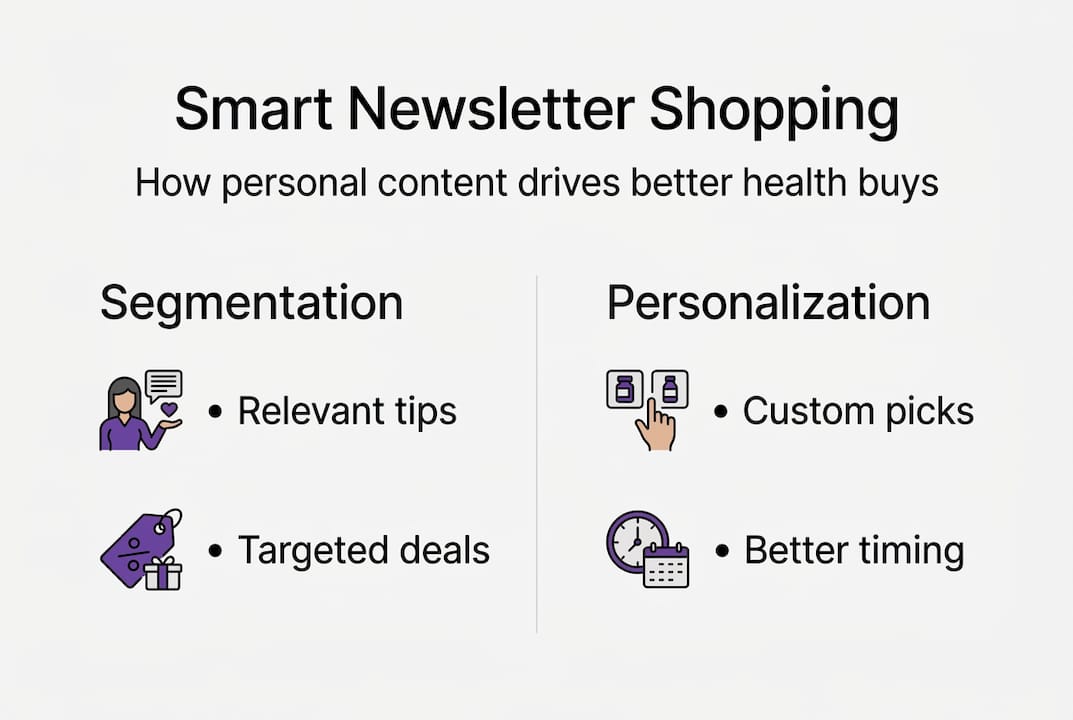
Behind every great wellness newsletter is a system working quietly to make sure you see the right content at the right time. It’s not magic. It’s segmentation and personalization, and when done well, it feels almost invisible.
Automated email flows generate 18x higher revenue per recipient compared to standard broadcast campaigns. That’s because flows respond to your behavior, what you clicked, what you browsed, what you left in your cart, rather than just blasting everyone with the same message.
Here’s what smart personalization actually looks like behind the scenes:
- AI-generated subject lines tailored to your past click patterns
- Predictive send times based on when you’re most likely to open
- Browse and cart triggers that follow up when you showed interest but didn’t buy
- Preference-based content blocks that swap in different products for different reader segments
- AI personalization for email tools that continuously refine messaging based on micro-engagements
| Approach | Open rate | CTR | Conversion |
|---|---|---|---|
| Non-segmented | 28.7% | 3.0% | 1.8% |
| Behaviorally segmented | 42.5% | 7.8% | 6.4% |
The difference between a newsletter that feels relevant and one that feels like spam often comes down to whether the sender is paying attention to your behavior or just sending to a list. For budget wellness shoppers, this matters a lot. You don’t want to wade through five emails about protein powders if you’ve only ever clicked on sleep supplements.
Pro Tip: Look for newsletters that reference your specific interests in the subject line or opening line. If it feels like it was written for you, it probably was, and that’s a good sign the brand is actually paying attention.
Pairing this awareness with smart shopping strategies helps you get even more mileage from the newsletters you choose to keep. And if you’re hunting for useful products for savings, a well-timed, personalized email can surface exactly what you need before you even think to search for it.
Pitfalls and edge cases: Maximizing newsletter value and avoiding overload
With segmentation explained, let’s address what happens when newsletters go wrong and how you can protect your inbox and wallet.
Not every newsletter earns its place in your inbox. Some start strong and slowly drift into daily deal blasts. Others were never valuable to begin with. Knowing the warning signs saves you time and keeps your attention where it belongs.
Common newsletter pitfalls to watch for:
- Too frequent: Sending every day or multiple times a week without adding new value
- Hype-heavy language: Phrases like “limited time only” or “you can’t miss this” in every single email
- No personalization: Every email looks identical regardless of what you’ve clicked or bought
- Unclear value: You finish reading and have no idea what you were supposed to do or learn
- Sales-first structure: Every email opens with a discount before offering any useful content
Over-sending drives unsubscribe rates up to 0.6% per campaign, and once someone checks out mentally, it’s very hard to win them back. Cold or ignored subscriber lists need re-engagement strategies, not more promotions.
“The brands that recover disengaged subscribers do it with honesty. They acknowledge the silence, offer something genuinely useful, and let the reader decide. No pressure, no countdown timers.”
If you notice a newsletter has stopped feeling useful, give it one more chance after a re-engagement email. If it still doesn’t deliver real value, unsubscribe without guilt. Your inbox is a resource, not a dumping ground. Applying practical money-saving strategies means being selective about where your attention goes, too.
For brands, the fix is straightforward: lead with tips, not transactions. For readers, the fix is just as simple: follow the newsletters that teach you something every single time. You can also explore improving ecommerce emails to understand what good looks like from the sender’s side, which helps you spot quality faster.
A fresh take: Trust, not tactics, wins for budget health shoppers
Pulling the key lessons together, here’s the hard-won insight for anyone tired of inbox noise or tired sales pitches.
Conventional wisdom says the brands with the best automation, the slickest AI tools, and the most aggressive segmentation win. And sure, those things help. But for health-conscious shoppers on a real budget, none of that matters if the content isn’t genuinely useful.
We’ve seen it firsthand. The newsletters people actually look forward to opening aren’t the ones with the flashiest subject lines. They’re the ones that feel like a knowledgeable friend who happens to know where the good deals are. That friend doesn’t pressure you. They inform you, then let you decide.
Education-first content builds something algorithms can’t manufacture: real trust. And trust, for a budget shopper deciding whether to spend $20 on a supplement, is everything. When a newsletter teaches you how to evaluate safe health supplement shopping before pointing you to a product, you’re not just a customer. You feel like a smart one. That feeling keeps you coming back, and that’s worth more than any open-rate metric.
Get curated wellness deals and savings in your inbox
You’ve seen the evidence. Newsletters that lead with value, personalize thoughtfully, and respect your time are the ones worth keeping. So why not make your inbox work harder for your health and your budget?

At Secret Finds, we curate practical, affordable wellness picks and send them straight to subscribers who want real value, not hype. Whether you’re exploring health supplement deals or building your routine around a solid budget must-haves guide, we make it easy to discover what’s actually worth your money. Sign up and start getting deals that make sense for your life.
Frequently asked questions
How do newsletters help budget health shoppers save money?
Curated wellness newsletters deliver targeted deals, plain-text tips, and free strategies that help you avoid hype and prioritize everyday value. Authentic newsletters provide practical product picks and free resources specifically designed for budget-minded shoppers.
Why are segmented and personalized newsletters more effective?
Segmented and personalized newsletters generate higher open and conversion rates by matching content to your unique interests and behaviors. Behavioral segmentation yields open rates of 42.5% versus 28.7% for generic newsletters.
What are the risks of subscribing to too many newsletters?
Too many emails can cause overload and lead to unsubscribing, especially if newsletters prioritize sales over valuable content. Over-sending increases unsubscribe rates up to 0.6% per campaign.
How does newsletter content differ from push notifications?
Newsletters focus on education and trust for long-term loyalty, while push notifications mainly drive short-term impulse with FOMO tactics. Push notifications evoke FOMO but newsletters drive loyalty through relevance and consistent value.