

If you’ve ever stood in the supplement aisle staring at a wall of fish oil capsules, wondering if you really need them, you’re not alone. Many of us assume that omega-3 supplements are the gold standard for heart and brain health. But here’s the thing: for most budget-conscious people, a can of sardines or a piece of mackerel might actually do more good than an expensive bottle of pills. This article breaks down what omega-3 really does, which sources give you the best bang for your buck, and how to shop smart without wasting money on things you don’t need.
Table of Contents
- What are omega-3 fatty acids and why do they matter?
- Top health benefits of omega-3: The science-backed impact
- Food vs. supplements: What’s best (especially on a budget)?
- Who should be careful? Risks and smart supplement shopping
- The uncomfortable truth: Most of us overthink omega-3 (and overspend)
- Smart choices for your wallet and wellness
- Frequently asked questions
Key Takeaways
| Point | Details |
|---|---|
| Fish first for benefits | Eating low-cost fatty fish like salmon or mackerel twice weekly offers the most reliable heart and wellness boost for your money. |
| Supplements: start low | If you need supplements, use 250-500mg EPA/DHA daily and check labels for third-party testing. |
| Watch out for risks | Avoid high doses if you take blood thinners, have a bleeding disorder, or plan surgery—see your doctor for advice. |
| Buy smart, not more | Focus on proven choices and budget-friendly brands to avoid wasting money on hype or unnecessary blends. |
| Consistency beats quantity | Regular moderate intake of omega-3 is more effective than sporadic high doses or expensive regimens. |
What are omega-3 fatty acids and why do they matter?
Omega-3 fatty acids are a family of fats your body can’t make on its own. That means you have to get them from food or supplements. There are three main types, and they’re not all created equal.
EPA (eicosapentaenoic acid) is found mostly in fatty fish and seafood. It plays a big role in reducing inflammation and supporting heart health. DHA (docosahexaenoic acid) is also found in fish and is critical for brain function and eye health. ALA (alpha-linolenic acid) comes from plant sources like flaxseed, chia seeds, and walnuts. Your body can convert ALA into EPA and DHA, but only in tiny amounts, which makes it a much less efficient source.
Here’s a quick breakdown of each type:
- ✅ EPA: Found in salmon, mackerel, sardines. Reduces inflammation, supports heart health.
- ✅ DHA: Found in fatty fish and algae. Supports brain, memory, and eye function.
- ✅ ALA: Found in flaxseed, chia, walnuts. Converts poorly to EPA/DHA; still beneficial but less potent.
The NIH omega-3 overview confirms that EPA and DHA are the forms your body uses most directly. ALA is better than nothing, but it’s not a substitute for marine-based omega-3s.
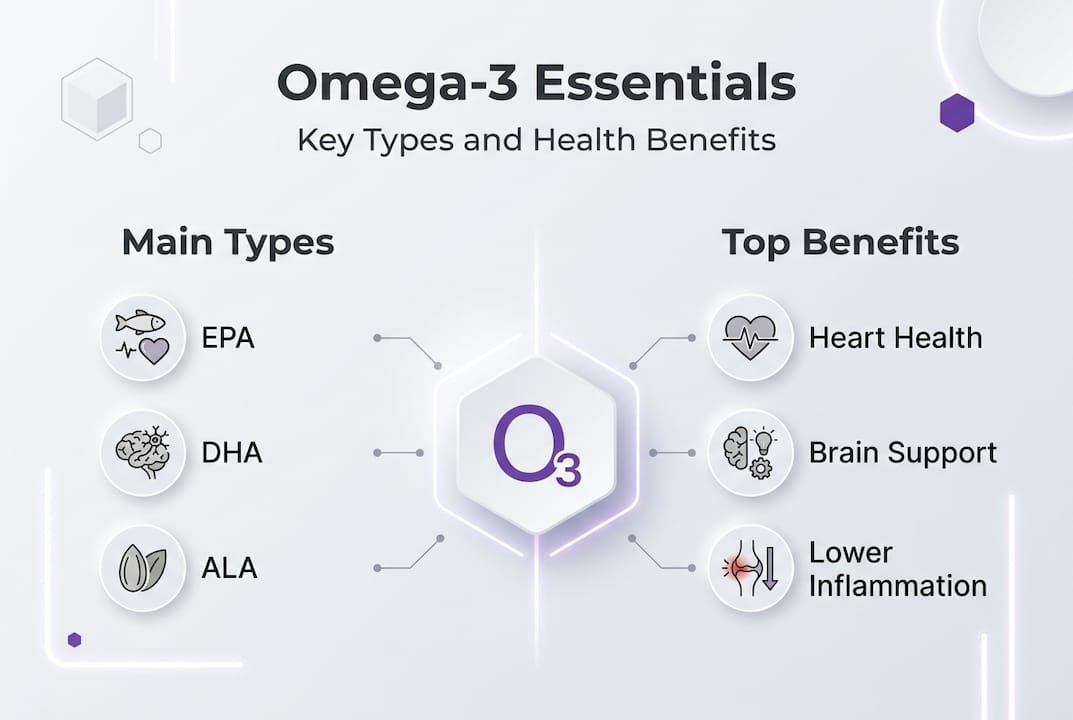
The big-picture health roles of omega-3 are impressive. We’re talking about omega-3 health benefits that touch your heart, your brain, your joints, and your immune system. According to Mayo Clinic, omega-3s especially EPA and DHA lower triglycerides, reduce inflammation, and benefit heart health in meaningful ways.
Pro Tip: If you’re choosing between plant-based and marine sources, go marine whenever possible. ALA from flax and chia is a nice addition to your diet, but it won’t replace the direct benefits of EPA and DHA from fish.
Top health benefits of omega-3: The science-backed impact
Now that you know what omega-3 is, let’s talk about what it actually does for your body. Because the research here is genuinely exciting.
Heart health is where omega-3 really shines. Meta-analyses show significant reductions in cardiovascular mortality and heart attacks, with triglycerides dropping 20 to 50 percent at doses of 3 to 4 grams per day. That’s a striking number. To put it in perspective, most prescription cholesterol medications don’t move triglycerides that dramatically.
Here’s a snapshot of what the science says:
| Health Area | Benefit | Notes |
|---|---|---|
| Triglycerides | 20-50% reduction | At 3-4g/day EPA/DHA |
| Heart attack risk | Significant reduction | Consistent across meta-analyses |
| Blood pressure | Modest reduction | More noticeable in hypertensive adults |
| Inflammation | Reduced markers | Supports joints and immune health |
| Brain function | Memory and mood support | Especially DHA |
But here’s the part most supplement ads won’t tell you. High-dose omega-3 can increase the risk of atrial fibrillation, which is an irregular heartbeat that raises stroke risk. This risk is more prominent at doses above 1 gram per day, particularly with certain prescription-grade formulas.
“The sweet spot for most people isn’t the highest dose. It’s a moderate, consistent intake from quality sources.”
You can explore the health outcomes of omega-3 in more detail, but the takeaway is simple. More isn’t always better. Moderate, regular intake, whether from food or a sensible supplement, delivers real benefits without the added risks. Recent omega-3 studies back this up consistently.
For those curious about fish oil benefits beyond the heart, DHA specifically supports cognitive function and learning, which matters at every age.
Food vs. supplements: What’s best (especially on a budget)?
Here’s where things get really practical. Because if you’re watching your wallet, this section might save you real money.
The honest answer is that food wins for most people. Fatty fish like salmon and mackerel are preferred for heart benefits, and aiming for two servings a week covers most of your omega-3 needs. Meanwhile, supplements show mixed results in randomized controlled trials, and foods are generally superior for most benefits.

Let’s compare your options side by side:
| Source | Avg. cost per serving | EPA/DHA per serving | Convenience |
|---|---|---|---|
| Canned sardines | ~$1.00 | 1,000-1,500mg | Easy, no prep |
| Canned mackerel | ~$1.50 | 1,000-1,300mg | Easy, no prep |
| Salmon (fresh) | ~$3-5 | 1,500-2,000mg | Moderate prep |
| Flaxseed | ~$0.20 | ALA only | Very easy |
| Fish oil capsule | ~$0.15-0.50 | 250-1,000mg | Very easy |
So when do supplements actually make sense? Here are the most common situations:
- You have a fish allergy and can’t eat seafood at all.
- You follow a strict vegetarian or vegan diet and want EPA/DHA from algae-based supplements.
- You travel frequently and can’t prepare fish regularly.
- Your doctor has recommended a specific therapeutic dose for a health condition.
- You want a simple daily backup to an already decent diet.
For affordable omega-3 solutions, the smartest move is to start with food and fill the gaps with a basic, no-frills supplement if needed. You don’t need a premium brand with fancy marketing. You need EPA and DHA in a clean, tested capsule at a reasonable price. Check out everyday budget tips for more ways to stretch your health dollars further.
The Cleveland Clinic omega-3 advice reinforces this: food first, supplements second.
Pro Tip: Start with food if you can. A can of sardines twice a week costs less than $3 and delivers more omega-3 than most daily capsules. Supplements are a great backup, not the main event.
Who should be careful? Risks and smart supplement shopping
Omega-3 gets a reputation for being completely harmless. And for most people, at moderate doses, it is. But there are real situations where you need to slow down and talk to your doctor first.
High doses raise atrial fibrillation and bleeding risks, and special caution is needed for people preparing for surgery, those on anticoagulants like warfarin, and anyone with a fish or shellfish allergy. These aren’t rare edge cases. They’re situations many everyday people find themselves in.
Here’s who should check with their doctor before starting omega-3 supplements:
- Anyone taking blood thinners or anticoagulant medications
- People with a history of atrial fibrillation or irregular heartbeat
- Anyone scheduled for surgery within two weeks
- People with fish or shellfish allergies
- Those with liver conditions or bleeding disorders
If you’re clear on all of those, here’s how to shop smart:
- Check the label for actual EPA and DHA milligrams, not just “fish oil” content. A 1,000mg capsule might only contain 300mg of actual EPA/DHA.
- Look for third-party testing certifications like USP, NSF, or IFOS.
- Avoid blends with unnecessary added ingredients that inflate the price.
- Skip the mega-dose formulas unless your doctor specifically recommends them.
- Compare cost per milligram of EPA/DHA, not cost per bottle.
For omega-3 shopping advice that keeps your budget intact, focus on value per dose, not flashy packaging. You can also save on health essentials by sticking to simple, tested products without the premium markup.
The safety guidance from NIH is clear: for most healthy adults, 250 to 500mg of combined EPA and DHA per day is a safe and effective starting point.
Pro Tip: Target 250 to 500mg of EPA/DHA daily if you’re using supplements. Start low, stay consistent, and don’t assume that doubling the dose doubles the benefit. It doesn’t.
The uncomfortable truth: Most of us overthink omega-3 (and overspend)
I’ll be honest with you. The supplement industry is very good at making you feel like you’re missing out if you’re not taking a high-dose omega-3 capsule every single morning. But most of that pressure comes from marketing, not medicine.
For most healthy adults, eating fish twice a week provides more reliable and cost-effective benefits than daily capsules. That’s not a knock on supplements. It’s just reality. A $1.50 can of mackerel beats a $40 bottle of omega-3 capsules for most people’s actual needs.
High-dose supplements are risky and usually unnecessary unless you’re under medical supervision. The real win with omega-3 isn’t finding the strongest formula. It’s building a simple, consistent habit. Two fish meals a week, or a basic low-dose supplement if fish isn’t an option, is genuinely enough for most people.
We’ve seen this pattern with omega-3 spending habits over and over. People spend more, expect more, and end up no healthier than someone who just eats sardines on a Tuesday. Consistency beats intensity every time. Keep it simple, keep it affordable, and your body will thank you.
Smart choices for your wallet and wellness
If you’ve made it this far, you already know more about omega-3 than most people walking into a pharmacy. And the best part? Doing this right doesn’t have to cost a fortune.

At Secret Finds, we’ve done the legwork to find a budget-friendly omega-3 supplement that gives you real EPA and DHA without the inflated price tag. It’s a clean, practical option for those days when fish just isn’t on the menu. And if you’re looking to build a smarter wellness routine overall, our budget wellness essentials guide is a great place to start. You can also explore more ways to save money on essentials without cutting corners on quality.
Frequently asked questions
What is the difference between EPA, DHA, and ALA omega-3s?
EPA and DHA are found mainly in fish and are used more efficiently by the body for heart and brain health. ALA comes from plants like flax and chia but converts poorly to EPA and DHA, making marine sources the stronger choice.
Is it better to get omega-3 from food or supplements?
Food sources like fish are generally preferred for heart benefits and tend to be more cost-effective. Supplements are a useful backup when eating fish regularly isn’t realistic.
Are high-dose omega-3 supplements safe?
High-dose supplements above 1 to 4 grams per day can increase atrial fibrillation risk and may raise bleeding concerns. Always consult your doctor before taking therapeutic doses.
How much omega-3 do I need each day?
For general wellness, aim for 250 to 500mg of combined EPA and DHA daily. The NIH omega-3 guidance supports this range as safe and effective for most healthy adults.
Can vegetarians get enough omega-3?
Vegetarians can get ALA from flax, chia, and walnuts, but this form converts less effectively to EPA and DHA. Algae-based EPA/DHA supplements are the best option for those avoiding fish entirely.











