

Most people know omega-3 as something healthy, but few understand exactly what it does for your body. You’ve probably heard vague claims about heart health or brain function, yet the specific mechanisms remain unclear. Omega-3 fatty acids deliver measurable benefits across multiple systems, from reducing triglycerides by 20-50% to improving memory and attention. This article breaks down the science-backed benefits of omega-3 supplementation and shows you how to incorporate affordable omega-3 into your wellness routine for lasting results.
Table of Contents
- Key takeaways
- How omega-3 supports heart health
- Cognitive and brain benefits of omega-3
- Omega-3’s role in inflammation and overall wellness
- Choosing the right omega-3: plant vs. marine sources and dosage tips
- Enhance your omega-3 intake with premium supplements
- Frequently asked questions about omega-3 benefits
Key Takeaways
| Point | Details |
|---|---|
| Triglyceride Reduction | Omega 3 fatty acids lower triglycerides by 20 to 50 percent at daily doses of 3 to 4 grams, contributing to lower heart disease risk. |
| Endothelial and Platelet Benefits | EPA and DHA improve endothelial function and modulate platelets to reduce excessive clotting, lowering cardiovascular risk. |
| Cognitive Dose Window | Moderate doses around 1 to 2 grams daily provide significant cognitive gains in attention, memory, and processing speed, with higher doses yielding diminishing returns. |
| Omega 3 Index Target | Aim for an omega 3 index above 8 percent to maximize heart protection. |
How omega-3 supports heart health
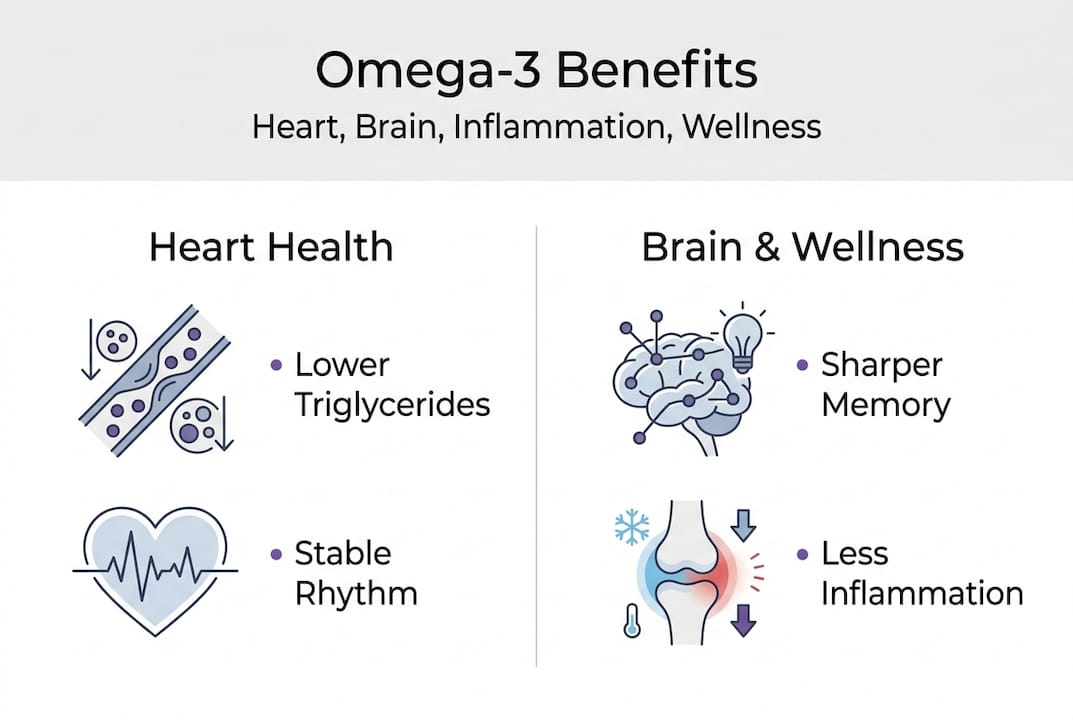
Your cardiovascular system benefits profoundly from adequate omega-3 intake. EPA and DHA reduce triglycerides by 20-50% at doses of 3-4 grams daily, a reduction that translates directly into lower heart disease risk. These marine omega-3s improve endothelial function, the critical lining of your blood vessels that regulates blood pressure and clotting.

The mechanisms extend beyond simple lipid reduction. Omega-3s enhance platelet function, preventing excessive clotting that leads to heart attacks and strokes. They also modulate your autonomic nervous system by improving vagal tone, which stabilizes heart rhythm and reduces arrhythmia risk. Daily intake around 2 grams correlates with reduced all-cause and cardiovascular mortality in patients with existing heart conditions.
Consider these cardiovascular benefits:
- Triglyceride reduction of 20-50% at therapeutic doses
- Enhanced endothelial function improving blood vessel flexibility
- Reduced platelet aggregation lowering clot formation risk
- Improved heart rate variability through vagal tone enhancement
- Lower systemic inflammation reducing arterial plaque buildup
Pro Tip: Aim for an omega-3 index above 8% to maximize heart protection. This measure reflects the percentage of EPA and DHA in your red blood cell membranes and serves as a reliable biomarker for cardiovascular risk.
| Omega-3 Dose | Triglyceride Reduction | Cardiovascular Benefit |
|---|---|---|
| 1-2g daily | 10-20% | Moderate protection |
| 2-3g daily | 20-35% | Strong protection |
| 3-4g daily | 35-50% | Maximum therapeutic effect |
“In cardiovascular disease patients, dietary omega-3 intake of approximately 2.12 g/day shows inverse association with mortality risk, demonstrating measurable survival benefits.”
The evidence supports consistent omega-3 supplementation as a practical intervention. When you maintain adequate levels through omega-3 fish oil supplements, you create sustained cardiovascular protection that compounds over time. This makes omega-3 one of the most cost-effective supplements for heart health optimization.
Cognitive and brain benefits of omega-3
Your brain contains high concentrations of DHA, making omega-3 essential for optimal cognitive function. Clinical trials demonstrate improvements in attention, perceptual speed, memory, visuospatial skills, and global cognition with omega-3 supplementation. These aren’t subtle changes, participants show measurable gains in memory recall and processing speed.
The dose-response relationship reveals interesting patterns. Benefits for episodic memory, the ability to recall specific events and details, show non-linear improvements. Moderate doses around 1-2 grams daily produce significant cognitive gains, while higher doses don’t necessarily amplify benefits proportionally. This suggests an optimal window exists for brain health supplementation.
| Omega-3 Type | Primary Brain Benefit | Mechanism |
|---|---|---|
| EPA (marine) | Mood regulation, inflammation | Anti-inflammatory signaling |
| DHA (marine) | Memory, neural structure | Membrane fluidity, synaptic function |
| ALA (plant) | Limited direct effect | Poor conversion to EPA/DHA |
Follow these steps to optimize omega-3 for cognitive health:
- Start with 1-2 grams daily of combined EPA/DHA from marine sources
- Take supplements with meals containing fat to enhance absorption
- Monitor cognitive improvements over 8-12 weeks, the typical response timeframe
- Adjust dosage based on individual response and health goals
- Combine with antioxidants like lutein for synergistic neuroprotection
Pro Tip: Pair your omega-3 supplement with brain-boosting mushroom compounds for enhanced neuroprotection and focus. The combination addresses multiple pathways supporting cognitive performance.
The cognitive benefits extend across age groups. Younger adults experience improved attention and processing speed, while older adults see better memory retention and reduced cognitive decline. DHA specifically supports the structural integrity of neurons, maintaining the fluidity of cell membranes that enables efficient signal transmission between brain cells.
Consider these cognitive improvements:
- Enhanced episodic memory for recalling specific events and details
- Faster perceptual speed in processing visual information
- Improved attention span and sustained focus during complex tasks
- Better visuospatial abilities for navigation and spatial reasoning
- Overall cognitive performance gains measurable on standardized tests
The research shows consistent patterns across multiple studies. When you maintain adequate omega-3 levels through quality supplements, you support both immediate cognitive function and long-term brain health. This dual benefit makes omega-3 particularly valuable for health-conscious individuals seeking affordable ways to enhance mental performance.
Omega-3’s role in inflammation and overall wellness
Chronic inflammation underlies most modern health problems, from arthritis to metabolic syndrome. Omega-3 supplementation reduces inflammation by suppressing pro-inflammatory cytokines and promoting specialized molecules that actively resolve inflammatory responses. This isn’t just symptom management, it’s addressing root causes.
Omega-3s work through multiple anti-inflammatory pathways:
- Suppression of TNF-alpha, a key inflammatory signaling molecule
- Reduction of IL-6 production, limiting systemic inflammation
- Inhibition of NF-kB activation, blocking inflammatory gene expression
- Activation of PPAR-gamma, promoting anti-inflammatory responses
- Enhanced production of resolvins and protectins that actively end inflammation
The mechanism differs from typical anti-inflammatory drugs. Rather than simply blocking inflammation, omega-3s promote the production of resolvins and protectins, specialized molecules your body creates from EPA and DHA. These compounds actively resolve inflammatory responses, returning tissues to healthy baseline states instead of leaving inflammation to linger.
Pro Tip: Balance your omega-6 to omega-3 ratio by reducing processed vegetable oils while increasing omega-3 intake. Most Americans consume 15-20 times more omega-6 than omega-3, promoting chronic inflammation. An ideal ratio sits closer to 4:1 or lower.
Membrane fluidity represents another critical benefit. Omega-3s incorporate into cell membranes throughout your body, improving flexibility and function. This enhanced fluidity allows better cell signaling, nutrient transport, and waste removal. Your cells literally work more efficiently when they contain adequate omega-3s.
“Omega-3 fatty acids serve as essential regulators of chronic inflammation, suppressing inflammatory cascades while promoting resolution pathways that support immune wellness and systemic health.”
The wellness implications extend beyond specific conditions. When you control inflammation effectively, you experience better energy levels, faster recovery from exercise, improved sleep quality, and enhanced overall vitality. These systemic improvements explain why omega-3 supplementation often produces benefits that seem unrelated to its primary mechanisms.
Combining omega-3 with other immune-supporting supplements creates synergistic effects. The anti-inflammatory foundation omega-3 provides allows other nutrients to work more effectively, maximizing your investment in wellness supplements.
Choosing the right omega-3: plant vs. marine sources and dosage tips
Not all omega-3 sources deliver equal benefits. Plant-based ALA from flaxseed and walnuts requires conversion to EPA and DHA, a process your body performs inefficiently at just 5-10% conversion rates. Marine sources provide direct EPA and DHA, bypassing this limitation entirely.
| Source Type | Primary Omega-3 | Conversion Needed | Best For |
|---|---|---|---|
| Plant (ALA) | Alpha-linolenic acid | Yes, 5-10% efficiency | Vegetarians, general health |
| Marine (EPA/DHA) | Direct EPA and DHA | No conversion required | Heart health, cognition, inflammation |
The research reveals interesting nuances. Plant-based ALA shows mortality benefits in cardiovascular disease patients, suggesting it provides value despite poor conversion. However, marine EPA and DHA demonstrate superior effects for triglyceride reduction, cognitive enhancement, and inflammation control. Your choice depends on specific health goals and dietary preferences.
Consider these supplementation factors:
- Marine sources deliver 10-20 times more bioavailable EPA/DHA per gram
- Plant sources require much higher doses to achieve similar blood levels
- Quality fish oil supplements cost less per effective dose than high-dose plant oils
- Algae-based supplements offer vegetarian EPA/DHA at premium prices
- Combination approaches using both sources may optimize diverse benefits
Pro Tip: Combine marine omega-3 supplements with a diet emphasizing whole foods and minimal omega-6 oils. This approach maximizes absorption while reducing inflammatory competition from excess omega-6 fatty acids.
Dosage targets depend on your health status and goals. For general wellness, aim for 1-2 grams daily of combined EPA and DHA. Cardiovascular protection requires 2-3 grams, while therapeutic triglyceride reduction needs 3-4 grams under medical supervision. The omega-3 index provides objective measurement, target levels above 8% for optimal health outcomes.
Affordability considerations matter for sustainable supplementation. Standard fish oil supplements deliver excellent value, providing 300-500mg of combined EPA/DHA per capsule at minimal cost. Concentrated formulations offer higher doses in fewer capsules, reducing pill burden while maintaining affordability. Look for budget-friendly options that don’t compromise on quality or purity.
Timing and absorption strategies enhance effectiveness. Take omega-3 supplements with your largest meal containing dietary fat, typically dinner for most people. The fat content improves absorption significantly compared to taking supplements on an empty stomach. Consistency matters more than perfect timing, establish a daily routine you’ll maintain long-term.
Enhance your omega-3 intake with premium supplements
Now that you understand omega-3’s comprehensive benefits, choosing quality supplements becomes straightforward. The omega-3 fish oil supplement delivers concentrated EPA and DHA with added lutein for enhanced antioxidant protection. This combination addresses cardiovascular health, cognitive function, and joint wellness in a single, affordable daily dose.

Complementary products amplify your wellness routine. The organic mushroom powder pairs perfectly with omega-3 for comprehensive brain support, combining neuroprotective compounds with anti-inflammatory benefits. These budget-friendly daily essentials make maintaining optimal health accessible without straining your budget. Quality supplementation doesn’t require premium prices when you choose products offering genuine value.
Frequently asked questions about omega-3 benefits
What are the main health benefits of omega-3 supplements?
Omega-3 supplements support cardiovascular health by reducing triglycerides and inflammation, enhance cognitive function including memory and attention, and help control chronic inflammation throughout your body. These benefits stem from EPA and DHA’s roles in cell membrane function and signaling pathways.
How much omega-3 should I take daily for heart and brain health?
Aim for 1-2 grams daily of combined EPA and DHA for general wellness and cognitive support. Cardiovascular protection typically requires 2-3 grams daily, while therapeutic doses for high triglycerides may reach 3-4 grams under medical guidance. Start with lower doses and adjust based on your response.
Are plant-based omega-3 supplements as effective as fish oil?
Plant-based ALA converts to EPA and DHA at only 5-10% efficiency, making it far less effective gram-for-gram than marine sources. While ALA provides some cardiovascular benefits, fish oil delivers direct EPA and DHA for superior results in cognition and inflammation control. Vegetarians can choose algae-based supplements for direct EPA/DHA.
Can omega-3 help reduce inflammation?
Yes, omega-3 significantly reduces chronic inflammation by suppressing pro-inflammatory cytokines like TNF-alpha and IL-6 while promoting resolvins and protectins that actively resolve inflammatory responses. This dual action makes omega-3 one of the most effective natural anti-inflammatory compounds available.
What are affordable ways to include omega-3 in a balanced diet?
Standard fish oil supplements offer the most cost-effective omega-3 source, delivering 300-500mg EPA/DHA per capsule at minimal expense. Eating fatty fish like salmon or sardines twice weekly provides dietary omega-3, while budget-conscious shoppers can find quality supplements that balance purity with affordability for consistent daily intake.
Recommended
- Omega 3 Fish Oil – Benefits The Cardiovascular System, Cognitive Function, and Learning Ability – 120 Capsules – Secret Finds Online
- Omega-3 Fish Oil Supplement – Rich in EPA+DHA, Lutein, Supports Heart, Brain & Joint Health, Antioxidant, 120 Capsules – Secret Finds Online
- 6-in-1 Organic Mushroom Powder – for Brain Health, Improved Focus, Fatigue Resistance and Digestive Support – Secret Finds Online
- Metabolism Support Gummies – Weight Management,Fat Burning, Metabolism Boosting,Supports A Healthy Nervous System – 60 Gummies – Secret Finds Online
- Омега-3 за хормонален баланс: ползи и приложение – Vitaminsflow











