

Most people assume that spending more on supplements automatically means better results. That logic costs Americans billions each year on products that may not deliver. The truth is, two of the most evidence-backed oil supplements, omega-3 and oregano oil, are also among the most affordable options available. Omega-3 oil supplements primarily support cardiovascular health through multiple proven mechanisms, yet most shoppers overlook them in favor of trendy, overpriced alternatives. This guide breaks down what the science actually says, how much to take, and how to get real results without overspending.
Table of Contents
- What are oil supplements? Popular types and why they matter
- The science behind omega-3: Cardiovascular, muscular, and pain support
- Oregano oil: Natural antimicrobial and gut health booster
- Smart use: Choosing, dosing, and maximizing value with oil supplements
- Want affordable, high-quality wellness essentials?
- Frequently asked questions
Key Takeaways
| Point | Details |
|---|---|
| Science-backed oil benefits | Omega-3 and oregano oil have evidence-supported roles in heart, muscle, pain, and immune health. |
| Budget-friendly strategies | Choose certified, tested supplements or rely on food sources for daily wellness savings. |
| Safe, practical routines | Stick to recommended doses, monitor for side effects, and use oils strategically for best results. |
| Know supplement limitations | Supplements aren’t a cure-all—food sources often deliver superior benefits, and individual responses vary. |
| Smart shopping approach | Look for quality, cost-effective options and reliable guidance when selecting oil supplements. |
What are oil supplements? Popular types and why they matter
Oil supplements are concentrated liquid or softgel products derived from plant or animal sources, designed to deliver fatty acids, antioxidants, or bioactive compounds your diet may be missing. They are not all created equal. Some target heart health, others focus on immunity or digestion, and the best ones do both efficiently.
The two standouts for budget-conscious wellness shoppers are omega-3 fish oil and oregano oil. Omega-3 contains two key fatty acids: EPA (eicosapentaenoic acid) and DHA (docosahexaenoic acid). These are the forms your body actually uses, and they are found in fatty fish like salmon and mackerel. Oregano oil, on the other hand, is a plant-based extract packed with carvacrol and thymol, two compounds with powerful biological activity.
Here is a quick look at what makes each one worth your attention:
- Omega-3 (EPA/DHA): Supports cardiovascular, muscular, and sports performance health
- Oregano oil: Recognized for antimicrobial, antioxidant, and anti-inflammatory qualities
- Fish oil softgels: Easy to dose, widely available, and affordable
- Oregano oil softgels: Convenient alternative to liquid drops, no strong taste
You can explore the full range of omega-3 wellness benefits to understand why these fatty acids show up in so many health conversations. For oregano, oregano oil softgels combine oregano with black seed oil for a dual-action formula.
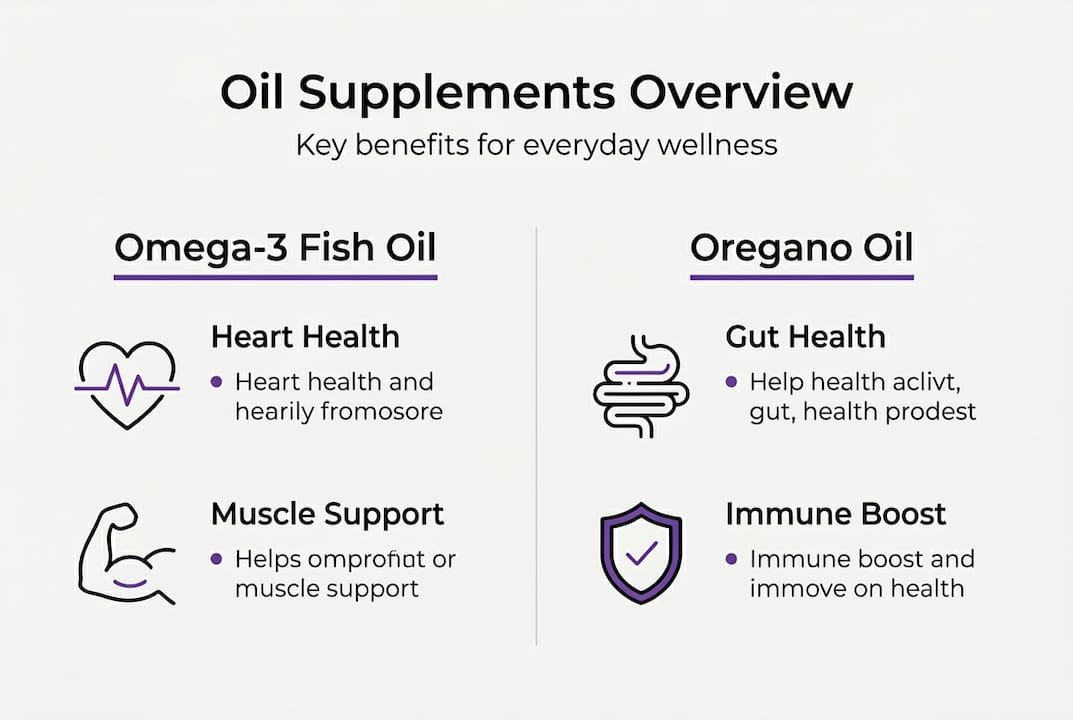
| Supplement | Key compounds | Primary benefits | Best form |
|---|---|---|---|
| Omega-3 fish oil | EPA, DHA | Heart, brain, joints, muscles | Softgel or liquid |
| Oregano oil | Carvacrol, thymol | Immunity, gut, antimicrobial | Softgel or diluted liquid |
Both oils fill nutritional gaps that whole foods alone often cannot cover consistently, especially for people on tight budgets who do not eat fatty fish multiple times per week.
The science behind omega-3: Cardiovascular, muscular, and pain support
Omega-3 has one of the largest research bodies of any supplement category. But the science is more nuanced than most product labels suggest, and understanding that nuance helps you spend smarter.
On the cardiovascular side, omega-3 works through several pathways: reducing triglycerides, improving endothelial function (how well your blood vessels relax and contract), and lowering systemic inflammation. However, RCTs show variable results, and high-dose EPA alone (not EPA combined with DHA) reduces cardiovascular risk in some trials. That distinction matters when you are reading supplement labels.
Key insight: Not all omega-3 products are equal. A supplement with a high EPA-to-DHA ratio may outperform a balanced blend for specific heart-related goals.
For muscle health and recovery, the omega-3 muscular health study data is encouraging. Omega-3 reduces exercise-induced inflammation, supports endurance, and may speed up recovery between workouts. This makes it relevant not just for athletes but for anyone who stays active.

Pain management is another area where omega-3 earns its place. Lower doses of 1.35 g/day or less are actually more effective for pain relief than higher doses, and 1000 to 2000 mg of EPA+DHA daily is the general recommended range. That is a budget-friendly amount that most standard fish oil capsules can deliver.
Here is what the evidence supports for omega-3:
- Reduces triglycerides (well-established)
- Supports joint comfort and reduces stiffness
- Aids muscle recovery after exercise
- May reduce chronic pain at moderate doses
- Improves brain function and mood in some populations
However, Cochrane reviews show little to no effect on actual cardiovascular disease events from omega-3 supplements alone, with food sources preferred for long-term heart protection. Supplements fill gaps; they do not replace a healthy diet.
| Omega-3 benefit | Evidence strength | Recommended dose |
|---|---|---|
| Triglyceride reduction | Strong | 2000-4000 mg/day (prescribed) |
| Pain management | Moderate | 1000-1350 mg EPA+DHA/day |
| Muscle recovery | Moderate | 1000-2000 mg EPA+DHA/day |
| CVD event prevention | Weak (supplements) | Food sources preferred |
Pro Tip: If you are shopping for affordable omega-3 supplements, look for products that list EPA and DHA amounts separately on the label, not just “total fish oil.” A 1000 mg fish oil capsule may only contain 300 mg of actual EPA+DHA. Check the omega-3 supplement capsules label before buying.
For a deeper look at how omega-3 affects your heart specifically, the omega-3 cardiovascular benefits breakdown is worth reading before you commit to a product.
Oregano oil: Natural antimicrobial and gut health booster
Oregano oil is one of the most underrated supplements in the budget wellness space. Most people think of it as a cooking herb. But the concentrated oil extract is a different product entirely, with measurable biological effects.
The two main active compounds are carvacrol and thymol. These are phenolic compounds that disrupt bacterial cell membranes, making oregano oil effective against a range of pathogens. Oregano oil supplements exhibit antimicrobial, antioxidant, anti-inflammatory, and antibiofilm activities, with promising applications for infections and gut health.
Here is where oregano oil actually helps:
- Gut health: Reduces harmful bacteria without the side effects of antibiotics
- Immune support: Antioxidant activity helps reduce oxidative stress
- Respiratory infections: Some evidence for short-term use during illness
- Antibiofilm action: Disrupts bacterial colonies that resist standard treatments
“Oregano oil is best used as a short-term, targeted tool, not a daily supplement you take indefinitely.”
For budget shoppers, the softgel form is the smartest buy. Liquid oregano oil requires careful dilution (never take it undiluted) and has a strong, intense taste. Softgels bypass both problems. The oregano oil for immune support softgels combine oregano with black seed oil, which adds its own anti-inflammatory layer.
If you want to stack your immune support further, a moringa anti-inflammatory capsule pairs well with oregano oil for a broader natural defense approach.
A few cautions worth knowing: oregano oil can irritate the digestive tract at high doses, may interact with blood thinners, and is not recommended during pregnancy. Always start with the lowest effective dose and monitor how your body responds. The oregano oil science is promising, but it is not a replacement for medical treatment.
Pro Tip: Use oregano oil softgels for 7 to 14 days when you feel a cold coming on or after a course of antibiotics to help rebalance gut flora. Then stop. Cycling it this way gets you the benefits without disrupting your gut microbiome long-term.
Smart use: Choosing, dosing, and maximizing value with oil supplements
Knowing what a supplement does is only half the equation. Knowing how to buy it wisely and use it correctly is where most people leave money on the table.
Here is a practical step-by-step approach to getting the most from oil supplements on a budget:
- Check for third-party certification. Look for USP or NSF seals. These confirm the product contains what the label claims. Budget brands like Kirkland and Nature Made consistently pass third-party testing and cost a fraction of premium brands.
- Read the actual EPA+DHA content. Do not buy based on total fish oil milligrams. A 1200 mg capsule might only deliver 400 mg of usable omega-3.
- Start with food first. Two servings of fatty fish per week covers most adults’ omega-3 needs. Supplements are for the gaps, not the foundation.
- Dose omega-3 conservatively. 250 to 500 mg EPA+DHA daily is sufficient if your diet is reasonably healthy. Go up to 1000 to 2000 mg if you have specific goals like pain management or muscle recovery.
- Use oregano oil short-term. Dilute liquid forms, or choose softgels. Cycle use over 1 to 2 weeks, then take a break.
| Strategy | Omega-3 | Oregano oil |
|---|---|---|
| Daily use | Yes, ongoing | No, cycle short-term |
| Dose range | 250-2000 mg EPA+DHA | Follow label; avoid high doses |
| Best form | Softgel (USP/NSF certified) | Softgel (avoids dilution issues) |
| Food alternative | Fatty fish 2x/week | Culinary oregano (mild effect) |
| Key risk | Fishy burps, GI upset | GI irritation, not for pregnancy |
One common mistake is stacking too many supplements at once. Start with one, track how you feel for 4 to 6 weeks, then add a second if needed. This also makes it easier to spot any side effects. Omega-3 may cause fishy burps and GI upset, and you should limit EPA+DHA to 2 g per day unless a doctor prescribes more.
For more ways to stretch your wellness budget, the budget-friendly daily essentials guide covers practical strategies across multiple product categories. The budget health buyers guide is also a solid resource for comparing supplement options without overpaying.
Pro Tip: Buy from third-party tested fish oil sources and check for oxidation. Rancid fish oil smells strongly fishy even through the capsule. If your bottle smells off when you open it, return it. Fresh oil should have a mild, neutral scent.
Want affordable, high-quality wellness essentials?
You now have a clear, evidence-based picture of what omega-3 and oregano oil can actually do, and how to use them without wasting money. The next step is finding products that meet the quality bar without the premium price tag.

At Secret Finds, we have done the curation work for you. Our omega-3 fish oil supplement delivers EPA, DHA, and lutein in a single 120-capsule bottle, supporting heart, brain, and joint health at a price that makes daily use realistic. Our oregano oil softgels combine oregano with black seed oil for a convenient, no-mess immune and gut support option. Browse both alongside other practical picks in our save money on essentials collection and put your new knowledge to work today.
Frequently asked questions
How can I tell if omega-3 supplements are high quality?
Look for USP or NSF third-party testing seals and transparent EPA+DHA labeling. Budget brands like Kirkland and Nature Made consistently pass independent testing and offer strong value.
What is the safest daily dose of omega-3 for heart and pain benefits?
Most adults benefit from 250 to 2000 mg EPA+DHA daily depending on their goals. Doses above 2 g per day should only be taken under medical supervision.
Can oregano oil help with gut health and infections?
Yes, oregano oil has proven antimicrobial and anti-inflammatory activities that support gut health, but use it short-term and always in diluted or softgel form to avoid irritation.
Is it better to get omega-3 from food or supplements?
Fatty fish is the preferred source. Cochrane reviews favor food sources over supplements for long-term cardiovascular protection, with supplements recommended only when diet falls short.
Are there any side effects with oil supplements?
Omega-3 commonly causes fishy burps and GI upset at higher doses; oregano oil can irritate the digestive tract and is not safe during pregnancy.











